

China Executive Office Chair: Why Leading Workplaces Choose It for Ergonomic Support and Long-Lasting Value
2026-10-17
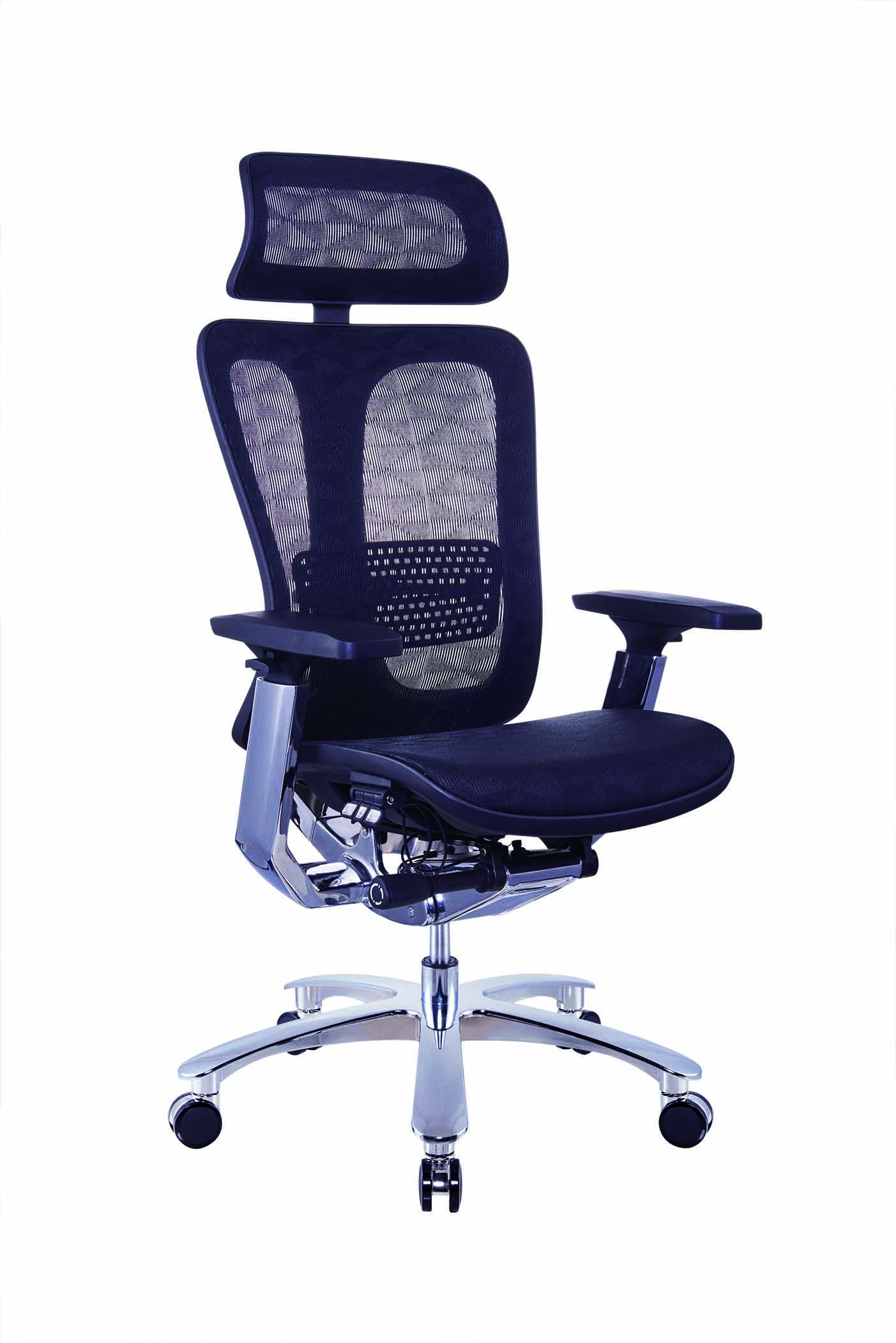
Most offices underestimate what a chair does to productivity—until back pain and mid-afternoon fatigue set in. The China executive office chair from OFCJNS flips that script. Designed for ergonomic support that holds up over long hours and built with materials chosen for long-lasting value, it’s become a quiet favorite among leading workplaces that refuse to compromise on employee comfort. Here’s why upgrading to this chair might be the simplest operational decision you make this year.
What Actually Makes an Executive Chair "Ergonomic" in Chinese Manufacturing?
Most buyers assume "ergonomic" means a curved backrest and adjustable armrests, but in Chinese manufacturing the term has a sharper meaning tied to production realities. Factories that specialize in executive seating often start with frame geometry rather than foam thickness. The chair's recline pivot point, seat-pan depth, and lumbar contact angle are calculated around the 50th percentile Asian body frame, then adjusted for export markets. Two chairs with nearly identical photos can feel completely different: one is built from an open-mold generic shell, while the other uses a factory-specific mechanism that has been iterated over years of OEM feedback.
Material sourcing also plays an outsized role. Chinese manufacturers near clusters in Guangdong or Zhejiang can pull from local suppliers of memory foam, mesh, and gas lifts with very short lead times, but the real differentiator is how those materials are paired. A chair with a dense, slow-rebound foam in the seat but a breathable mesh back may pass as "ergonomic" to a casual buyer, yet fail under eight hours of use. The better factories test foam compression set, mesh tension, and mechanism durability in-house, often using jigs copied from European or Japanese standards. That pragmatic copying, combined with rapid prototyping, allows them to refine pressure distribution without the brand markup.
Certification and client audits force a discipline that generic trading companies rarely match. Many export-oriented Chinese manufacturers now maintain BIFMA or EN 1335 test reports, and some go further by mapping their chairs against anthropometric data from key markets like Germany or the United States. The chair that emerges from this process is not just "ergonomic" as a label; it reflects a chain of decisions about pivot torque, backrest flex, foam density, and armrest height ranges that were made with specific body types and work patterns in mind. When a factory can show the test data and explain why a particular lumbar depth was chosen, the word ergonomic starts to mean something concrete.
Inside the Testing Labs: How These Chairs Earn Their Long-Lasting Reputation
Walk into the testing lab and the first thing you notice is the noise. Hydraulic presses slam down on seat cushions, a robotic arm rocks armrests back and forth, and a wheeled sled drags a chair across a bumpy rubber mat. Every motion is counted, every force is calibrated, and the goal is simple: compress ten years of daily use into a few brutal weeks.
The chairs don't get any special treatment. One fixture drops a 150-pound weight onto the seat from half a foot up, over and over, until the foam and frame prove they won't crack or sag. Another rig tilts the chair onto two legs and pushes sideways, checking the base and casters for hidden weak spots. Fabrics are rubbed thousands of times with abrasive wool, and metal parts are sprayed with salt mist to see if rust dares to show up. Even the gas lift gets cycled up and down 20,000 times while loaded to twice its rated capacity.
Only after a chair survives all of this does the lab sign off. That's why the reputation sticks: by the time a model reaches a real desk, it has already been dropped, dragged, twisted, and soaked in ways a normal office would never manage in a decade.
The Hidden Cost Savings Behind Premium Chinese Office Seating
The sticker price on a high-end Chinese office chair often sends procurement teams back to the budget catalog, but that reaction overlooks where the real money drains away. Cheap chairs rarely survive more than two years of daily use—mesh sags, armrests crack, and gas lifts start sinking. A well-built premium model from a Chinese factory with tight quality controls can easily hold up for seven or eight years, meaning you would buy three or four budget chairs in the same window. When you calculate cost per year of actual use, the “expensive” option frequently ends up cheaper.
There is also the quiet savings from fewer employee complaints and less downtime. A chair with adjustable lumbar support, a synchronized tilt mechanism, and breathable fabric keeps people comfortable through long shifts, which reduces the nagging back and neck issues that drive short-term absences. Several operations managers I have spoken with noticed a drop in requests for standing desk conversions or ergonomic cushions once they switched to better seating—those small purchases and accommodations add up faster than most budgets admit.
Warranty terms are another place where hidden value shows up. Premium Chinese office seating often ships with five- to ten-year coverage on the frame, mechanism, and gas lift, including replacement parts at little or no cost. Instead of dealing with a broken chair every quarter and writing it off, you get a simple parts swap and another few years of service. That turns a one-time capital expense into a long-term asset rather than a recurring line item.
From Startups to Fortune 500s: Why Decision-Makers Keep Reordering
When a purchasing habit survives the leap from a five-person startup to a global enterprise, it usually means the product has become part of the operational furniture. Decision-makers rarely reorder out of brand loyalty alone; they return because the thing simply keeps working as teams scale, budgets shift, and internal processes get rewritten. That kind of quiet reliability removes the mental load of constantly evaluating alternatives.
There is also a practical side. Reordering from the same source means fewer vendor negotiations, predictable billing cycles, and support staff who already know the company's history. What starts as a convenience for a founder becomes a risk-reduction strategy for a CFO. If a tool or service can handle both a scrappy launch phase and a heavily audited enterprise environment, switching costs start to look like a needless gamble.
Perhaps most telling is how these repeat orders spread through word of mouth inside industries. A procurement lead at a Fortune 500 firm is far more likely to trust a vendor that already survived the chaos of a startup scale-up than one with a polished pitch but no track record under pressure. That organic credibility is hard to fake, and it keeps the reorder button active long after the initial contract is signed.
Ergonomic Support That Survives 10-Hour Days (and 5-Year Warranties)
Most chairs feel great for the first thirty minutes. It's hour seven where the truth comes out. That's why this seat was built around a dynamic lumbar system that shifts with your spine instead of forcing it into one rigid position. The mesh back follows your movement through conference calls, deep-focus sprints, and the occasional lean-back stretch, keeping pressure off your lower back without making you constantly readjust. By the end of a ten-hour day, you won't be counting down the minutes to stand up.
Durability isn't just a buzzword here. The armrests are reinforced to resist the nervous tapping and weight-shifting that break lesser chairs within a year. The gas lift is tested beyond 100,000 cycles, and the casters roll smoothly over both carpet and hard floors without scarring. We're confident enough in the engineering to back it with a five-year warranty that covers the frame, mechanism, and upholstery—not just the parts that rarely fail. If something gives out under normal daily use, we replace it. No fine-print hoops.
That kind of support changes how you work. Instead of squirming through meetings or getting up every twenty minutes to relieve a stiff back, you stay locked into your flow. The tilt tension adjusts to your weight so recline feels balanced, not like a trust fall. You'll notice it most on those back-to-back deadline days, when the chair becomes the one thing in your setup that never needs a break.
Beyond the Boardroom: Versatility That Fits Every Workspace Style
The traditional boardroom piece often feels out of place the moment you roll it into a sunlit studio or a compact home office. This collection breaks that mold. Clean lines and a low-profile silhouette let it settle naturally against raw brick, glass partitions, or a bookshelf-lined corner without shouting for attention. The upholstery options—ranging from muted wool blends to full-grain leather—give you room to match a formal conference table one week and a standing desk the next.
Adjustability is where the versatility really shows. The recline tension, seat depth, and lumbar support can be tuned in seconds, so a morning of spreadsheet reviews feels as supported as an afternoon sketching session. Instead of forcing your body to adapt to the furniture, the chair adapts to the way you actually work—whether that means leaning forward for detail tasks or settling back for a long call.
Even the base and casters were chosen with mixed environments in mind. Soft-rolling wheels glide over hardwood, low-pile carpet, and tile without leaving marks, while the frame's matte finish resists scuffs from daily movement between rooms. It's not about being the most formal piece in the room; it's about being the one that makes any room work better.
FAQ
Instead of a fixed lumbar curve, the backrest uses a tensioned mesh that adapts to the spine's natural movement. The armrests adjust in four directions, and the seat depth can slide forward or back to reduce pressure behind the knees. This level of adjustment means you aren't locked into one posture all day.
They look at cost per year rather than the initial price tag. A chair that keeps its cushion shape, doesn't squeak after six months, and rarely needs replacement saves far more in the long run. The aluminum base and reinforced gas lift are built to handle daily use without losing stability.
The mesh fabric resists pilling and sagging even when used around the clock. Casters are tested for smooth rolling on both carpet and hard floors, and the mechanism stays quiet after thousands of adjustments. Facilities teams appreciate that they don't have to constantly tighten bolts or replace wheels.
The seat height range and weight capacity are broader than typical executive chairs. Taller users can extend the headrest, while shorter users can lower the armrests enough to keep shoulders relaxed. The seat pan width works for both slim and larger frames without making anyone feel squeezed.
Yes, the tilt mechanism has a smooth recline with adjustable tension, so you can lean back without feeling like you're falling. A multi-position lock lets you stop at a comfortable angle for reading or taking a call. The lumbar support follows you as you recline, which many chairs fail to do.
Very little beyond occasional vacuuming of the mesh and wiping the armrests with a damp cloth. The gas lift and casters are sealed units, so no lubrication is needed. If a part ever wears out, replacement components are available individually, which extends the chair's service life instead of forcing a full replacement.
It uses the same grade of mesh, nylon, and aluminum as premium imports but without the added shipping and import costs. The difference is in the fit and finish: tolerances are tight, stitching is even, and the recline action feels damped rather than jerky. Leading workplaces often discover they can outfit twice as many workstations for the same budget while keeping the same comfort level.
Conclusion
Ergonomic support in Chinese executive chairs has moved far beyond a padded seat and an adjustable armrest. Manufacturers now run designs through biomechanical feedback loops and endurance rigs that mimic years of daily use, compressing foam, cycling gas lifts, and twisting lumbar mechanisms until they either fail or prove they won't. That's why a chair rated for ten-hour days actually holds its shape and resistance after month three, not just on day one. It's also where the long-term value hides: when a chair survives 50,000 sit-to-stand cycles and still keeps your spine aligned, procurement teams stop budgeting for annual replacements and start treating seating as a fixed asset.
The reorder pattern tells the real story. Small startups buy a few units for a tight office, then come back for entire floors. Fortune 500 facilities managers standardize on the same models because the five-year warranty rarely gets exercised and the comfort curve never dips. Beyond the boardroom, the same frame and tilt mechanism work in a home studio, a call center, or a design lab—clean lines, muted finishes, and a weight capacity that doesn't flinch. What leaders are really choosing is predictability: a chair that feels the same at hour eight as it did at hour one, without a premium price inflated by brand noise.
Contact Us
Contact Person: Diff Wang
Email: [email protected]
Tel/WhatsApp: +8613650281199
Website: https://www.ofcmeshchair.com/