

Custom Office Chair: Design Your Perfect Workspace Throne for All-Day Comfort
2026-09-23
Your chair knows exactly where to press into your thighs by 3 p.m. But it has no idea how to support your lower back during a deep-focus sprint. That disconnect is why so many 'ergonomic' chairs end up collecting dust or becoming a makeshift coat rack. A custom office chair flips the script: instead of adapting your body to the chair, you design the chair around your body, your desk height, and the way you actually work. That’s the philosophy behind OFCJNS—and the reason a well-designed workspace throne can carry you through marathon meetings and creative bursts without the usual stiffness. Ready to rethink what you’re sitting on?
Your Spine Has a Shape — Why Your Chair Should Too
Most people spend hours seated without realizing the lower back isn't meant to be flat. The spine has an inward curve at the lumbar region and a gentle outward curve at the thoracic level. When a chair forces you into a single rigid position, that natural S-shape gets flattened or exaggerated, and the surrounding muscles have to work overtime just to keep you upright.
A chair shaped with that curve in mind does more than look different. It lets the pelvis tilt slightly forward, which stacks the vertebrae the way they're designed to sit. Instead of sliding into a slouch or propping yourself with cushions, your back settles against a surface that mirrors its own contours. The result isn't a forced "perfect posture" but a position where you don't have to fight the chair to stay comfortable.
What's often overlooked is that no single curve fits everyone. The depth of the lumbar support, the height of the backrest, even the seat pan angle change how your spine rests. That's why "one-size-fits-all" chairs rarely feel right after an hour. If the chair can adapt to your particular shape rather than demanding your spine adapt to it, the relief is noticeable long before you think about posture.
Armrests That Actually Rest Your Arms, Not Just Fill Space
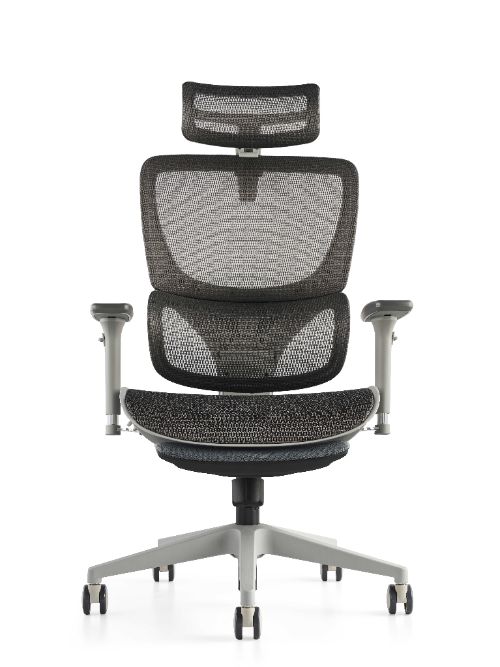
Most armrests are an afterthought—flat slabs that leave your elbows digging in or your forearms dangling. These ones take a different approach. The top surface has a subtle contour that follows the natural curve of your arm, distributing pressure evenly instead of concentrating it on a single point. You can lean into them for hours without the familiar ache creeping up your wrist or shoulder.
Height and angle adjust with a simple squeeze, so you can bring the support exactly where your body needs it—whether you're typing, reading, or kicking back. They also slide forward and backward, which means your elbow stays supported even when you sit deep in the chair. No more perching on the edge just to reach a comfortable position.
The padding feels firm at first, but that's deliberate. It's dense enough to hold its shape under weight, yet soft enough on the surface to avoid pressure points. After a few days, you'll notice you've stopped fidgeting—your arms finally have a place to land that actually works.
The Fabric Under You Matters More Than You Think
You spend roughly a third of your life lying on it, yet the fabric closest to your skin rarely gets a second thought. Cotton, linen, bamboo, or synthetic blends each hold heat, wick moisture, and resist wrinkles very differently. That quiet difference shows up at 2 a.m. when you flip the pillow for a cool side or kick off the covers because the weave traps too much body heat.
A tightly woven percale feels crisp and cool against the skin, while sateen leans silkier and warmer. If you sleep hot, a breathable linen or a moisture-wicking blend can do more for your rest than adjusting the thermostat by a few degrees. And beyond comfort, the right fabric holds up better over time, pilling less and softening with every wash instead of thinning out.
The next time you change the sheets, pay attention to what is actually touching you. It is not just decoration; it is the layer that shapes how easily you fall asleep and how refreshed you feel when you wake.
A Chair That Fits Your Desk, Your Room, and Your Body
Most chairs force you to choose: it either slides under the desk or supports your back through a long afternoon. This one starts with the desk. The armrests and seat height adjust independently, so the chair can sit flush against a low shelf or tuck fully beneath a standing-desk frame without losing its recline. The backrest follows your shoulder blades rather than fighting them, and the lumbar curve moves with you when you shift from typing to reading.
The same design logic carries into the room. The base has a smaller footprint than a typical office chair, and the casters are coated to roll quietly on wood, tile, or low-pile carpet. You can choose a frame finish that echoes your existing furniture or adds a deliberate contrast, so the chair doesn't read as a piece of office equipment stranded at home.
Then there's what you actually feel after hour three. The seat pan is wide enough to let you sit cross-legged but not so deep that it presses behind your knees. Fabric options breathe instead of trapping heat, and the recline tension adjusts without a manual by sensing your weight. It's a chair that stops calling attention to itself, which is exactly the point.
What 'All-Day Comfort' Really Means for Your Hips and Thighs
When a product promises all-day comfort for your hips and thighs, it’s not just about soft padding. It means the design actively follows the natural shape of your lower body as you sit, stand, and shift weight. The material should distribute pressure evenly, so you don’t feel that sharp pinch near the hip bone or the dull ache along the outer thigh after a few hours. Without this kind of support, even a well-cushioned seat starts to feel like a slow squeeze on your circulation.
Real all-day comfort also depends on how the fabric and foam respond to heat and movement. Stiff, dense foam might feel supportive for the first twenty minutes, but it traps heat and forces your muscles to work against it. A better design uses breathable layers and contoured cutouts that let your hips settle into a neutral position, not pushed forward or tilted to one side. That means less friction, fewer pressure spots, and a noticeable difference when you get up after a long drive or desk session.
Finally, the real test is what happens over eight or ten hours. If the padding flattens out or the side seams dig into your thighs, the promise was just marketing. True comfort shows up in the small details: a slightly wider seat base, a gentle slope under the hamstrings, and edges that don’t create a hard ridge. When those elements work together, your hips and thighs feel supported without being squeezed — and you stop thinking about the chair altogether.
Building a Chair That Outlasts Your Last Three Office Jobs
Most office chairs are designed for a single warranty cycle, not a career. The frame on a typical task chair starts creaking after eighteen months, the cylinder gives out around the time you've memorized the breakroom coffee rotation, and the armrests peel like a sunburn. Building a chair that outlasts your last three office jobs means ignoring that planned obsolescence entirely. It starts with a steel base that could survive a forklift collision and a gas lift rated for twice the weight of anyone who will actually sit in it. If a part can't survive being dropped down a flight of stairs, it doesn't make the cut.
Then you look at the fabric. Most upholstery is chosen because it photographs well in a catalog, not because it can handle ten years of jeans, spilled energy drinks, and the occasional nervous picking. We use a dense, abrasion-resistant weave that hides stains and doesn't pill. The foam underneath is high-resilience, not the cheap polyurethane that flattens into a pancake by the second performance review. The result is a seat that feels the same on day one and day two thousand, even if your job title has changed five times since you bought it.
Finally, every joint and adjustment mechanism is overbuilt. Tilt tension knobs are metal, not plastic. Armrest brackets are bolted through the frame, not snapped into a groove. If something does wear out, it's replaceable with a single Allen key—no specialized tools, no shipping the whole chair back. A chair that lasts through three office jobs isn't a miracle; it's just built without the assumption that you'll buy another one in two years.
FAQ
The chair has multiple adjustment points—seat height, seat depth, backrest tilt, and lumbar support. You can fine-tune each until your feet rest flat on the floor and your lower back feels supported. Many users spend the first few days experimenting with settings before locking in their ideal position.
We use high-density memory foam that conforms to your shape without going flat. The outer fabric options include breathable mesh, soft weave, or premium leather. Each material is tested for durability and ease of cleaning, so spills and daily wear won't ruin the look.
Absolutely. The curved backrest encourages a neutral spine posture, and the waterfall seat edge reduces pressure behind your knees. Combined with adjustable armrests that support your elbows, you can sit for eight or ten hours without the usual stiffness.
Yes, color is one of the easiest things to personalize. You can pick a single tone or mix two shades—for example, a charcoal frame with a burnt orange seat. We also offer custom stitching and logo embroidery if you want a truly unique piece.
Instead of a fixed bump, the lumbar support slides up and down and can be pushed deeper or shallower. This lets you place the curve exactly where your lower back needs it, whether you're tall or short. It’s firm enough to hold your posture but soft enough to avoid digging in.
The chair is built with a reinforced steel base and a Class 4 gas lift, so it safely supports up to 350 pounds. The wide seat pan and dense foam ensure it stays comfortable even for heavier users over years of daily use.
It ships in a compact box with clear instructions and all the tools included. Most people finish assembly in about 20 minutes. The armrests and headrest snap into place without extra screws, so you won't need to wrestle with complicated parts.
We offer a 60-day trial period. If the chair doesn't work for your body, you can send it back for a full refund—no restocking fees. We just ask that you keep the original packaging to make the return pickup easier.
Conclusion
A truly custom office chair starts by admitting the obvious: your back isn't a flat board, so why force it into a one-size-fits-all shell? The best designs mirror the gentle S-curve of your spine, letting the lumbar support adjust to where you actually need it instead of where a factory guessed. Armrests earn their name only when they move in four directions—height, width, depth, and angle—so your elbows rest at a natural ninety degrees without hiking your shoulders. Then there's the fabric, which is less about looks and more about how it behaves over eight hours. Breathable weaves stop the midday heat buildup, while dense foam keeps pressure points from forming. And because your chair doesn't live in a showroom, the right fit accounts for your desk height, floor clearance, and the narrow doorway between your workspace and the rest of your life.
All-day comfort is not a buzzword—it's a physical test for your hips and thighs. A waterfall seat edge removes pressure behind the knees, while adjustable seat depth lets shorter and taller bodies share the same chair without cutting off circulation. Underneath, a good foam density distributes weight so you're not sinking or rocking after lunch. But comfort means nothing if the chair gives up in year two. Custom builds use reinforced frames, replaceable gas lifts, and fabrics rated for tens of thousands of cycles, so the chair outlives the lease, the job, and maybe your third monitor upgrade. That's the real payoff of going custom: you're not buying a chair that fits someone—you're building the one that fits you.
Contact Us
Contact Person: Diff Wang
Email: [email protected]
Tel/WhatsApp: +8613650281199
Website: https://www.ofcmeshchair.com/