

Top Vulcanizing Press Solutions for Reliable Rubber Molding
2026-08-29
Rubber molding demands precision, and the right vulcanizing press can make or break your production line. Whether you're tackling complex automotive parts or high-volume consumer goods, inconsistent curing or hydraulic failures quietly eat into your margins. You need equipment that holds temperature, pressure, and cycle times without constant babysitting. That's where SFC comes in—we've spent years refining press designs that handle the real-world abuse of daily molding, not just the specs on a datasheet. In this guide, we'll walk through the top vulcanizing press solutions that deliver reliable, repeatable results, and show you what to look for before your next purchase.
Why Temperature Uniformity Makes or Breaks Rubber Parts
In rubber curing, a few degrees of difference can shift crosslink rates enough to create hard and soft zones within the same part. Hot spots on the mold face push local areas toward scorch while cooler pockets remain tacky and undercured. The result is not just a cosmetic flaw but a part with unpredictable compression set and tear strength, even when the average mold temperature reads perfectly on the controller.
Thick or asymmetric rubber parts expose this problem even more sharply. Heat must travel from the mold surface into the center, and that path is rarely even. A sensor mounted near the cavity wall may show a stable 170°C while the core is still climbing toward cure temperature. Operators who trust that reading end up demolding parts that appear solid outside but are under-vulcanized inside, leading to delamination or premature failure once the component is in service.
Uniformity matters more than the setpoint itself because it drives consistency from shot to shot. Heater degradation, edge cooling, and poor mold venting all introduce small thermal gradients that grow into measurable differences in durometer, rebound, and dimensional stability. Without active attention to temperature distribution, the same recipe can produce acceptable parts in the morning and rejects by afternoon, leaving engineers chasing material changes when the real fault lies in heat delivery.
Hydraulic Systems Still Dominate—Here’s What’s Changing
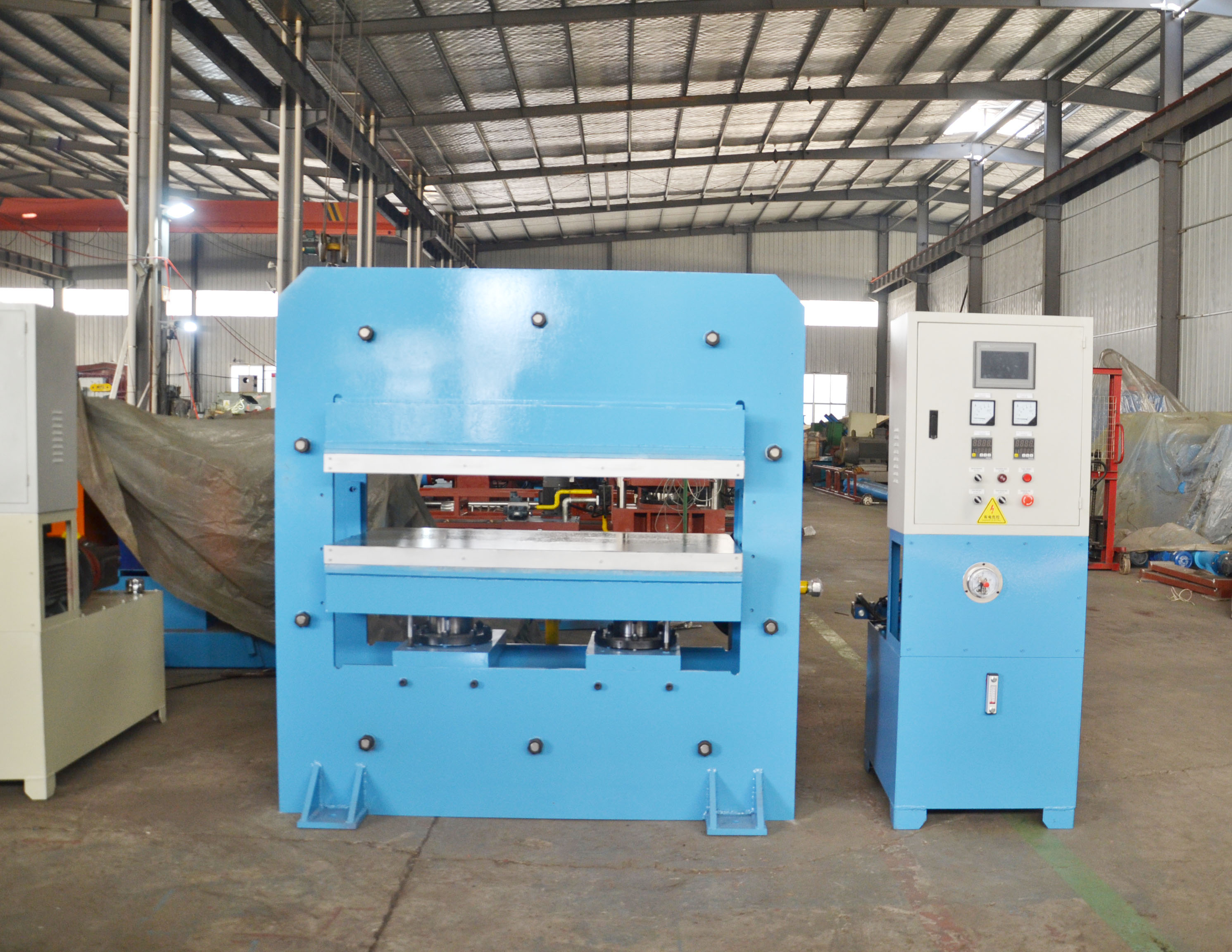
Hydraulics remain the go-to choice for heavy lifting, construction machinery, and industrial presses because nothing else matches their power density and ability to shrug off brutal conditions. A compact hydraulic cylinder can generate forces that would require an electric motor several times the size, and the systems tolerate dirt, shock, and sustained overload without missing a beat. That core advantage is not disappearing; it is why hydraulic systems still dominate in applications where failure is not an option.
What is changing is the layer of intelligence wrapped around that brute strength. Variable-speed pump drives, digital displacement pumps, and electro-hydrostatic actuators are replacing fixed-displacement setups that waste energy through throttling. Sensors now track pressure spikes, fluid temperature, and component wear in real time, feeding data into predictive maintenance models that flag a failing seal or contaminated oil before a breakdown happens. Biodegradable and fire-resistant fluids are also becoming more common, driven by stricter environmental and safety rules.
Electrification is not killing hydraulics; it is forcing a hybrid rethink. Mobile machines increasingly pair a diesel or electric prime mover with a hydraulic subsystem that only runs when high force is needed, while low-load functions shift to electric actuators. This split architecture cuts fuel burn and noise without sacrificing lifting capacity. The result is a quieter evolution: hydraulic systems are becoming leaner, more connected, and more efficient, but they are still the muscle behind the heaviest work.
Smart Clamping That Adapts to Mold Expansion
Traditional clamping systems often struggle when molds heat up and expand during production. Fixed clamping force can lead to uneven pressure, part defects, or even mold damage. Our approach uses real-time feedback from embedded sensors to detect thermal expansion and automatically adjust clamping force. This keeps the mold face aligned and consistent, even through long cycles or varying ambient temperatures.
The system builds a dynamic profile of the mold's expansion behavior over the first few cycles. Rather than applying a one-size-fits-all setting, it learns how the specific mold grows and contracts, then applies predictive adjustments before expansion becomes a problem. Operators no longer need to stop production to re-torque clamps or compensate manually.
What sets this apart is the combination of high-resolution strain gauges and a closed-loop control unit that reacts within milliseconds. It works with existing mold bases and doesn't require specialized tooling. The result is fewer rejected parts, longer mold life, and a noticeable drop in setup adjustments between shifts.
Reducing Scrap Rates with Real-Time Cure Monitoring
A cure cycle isn't really a countdown; it's a chemical conversation. Real-time cure monitoring listens to that conversation through sensors embedded in the tool or placed against the part, tracking changes in ion mobility, impedance, or ultrasonic velocity as the material crosslinks. Instead of trusting a recipe that assumes every batch behaves the same, the line knows exactly when the resin has reached the right conversion—so the press opens only when the part is actually ready.
That precision removes the two biggest scrap drivers: under-cure, which can pass initial inspection but fail later under load, and over-cure, which wastes cycle time and can make parts brittle. Teams can also spot drift early—a worn heating element, a bad thermocouple, a supplier change in resin reactivity—before it turns into a full shift of rejected parts. On lines that adopted the approach, scrap reductions often come not from a single dramatic fix but from dozens of small saves that stop adding up against the monthly yield report.
Energy Savings Without Sacrificing Vulcanization Quality
Cutting energy use in vulcanization has long been seen as a fast route to undercured rubber, but that assumption is outdated. Modern press controls, better insulation around mold edges, and precise temperature mapping let a line run at lower heater setpoints while holding the cure curve steady. The result is less wasted heat without any drift in modulus or tensile strength.
One practical shift is to monitor the actual degree of cure in real time instead of relying on fixed cycle timers. By pulling temperature data from inside the mold and adjusting dwell time accordingly, operators can end the cycle the moment the target state of cure is reached. This avoids excessive heating of already-cured sections, which usually only adds energy cost and risks overcrosslinking the surface layer.
Switching to segmented heating zones also helps. The thickest rubber sections receive more heat early, while thinner edges are held back, so the whole part reaches full cure at roughly the same moment. Energy no longer pours into areas that are already done, and the final product keeps the same tear resistance, compression set, and adhesion values as a conventionally cured batch.
Choosing the Right Press Size for Your Rubber Molding Line
Sizing a rubber molding press starts with clamping force, but a common mistake is to treat tonnage as the only number that matters. Calculate the projected area of the molded part at the parting line, then multiply it by the cavity pressure your compound typically needs. Rubber flows differently than thermoplastics, so using a plastic injection molding rule of thumb will often leave you short on force. Add a safety margin of 10 to 15 percent, not just to avoid flash but to protect mold plates from uneven wear over long runs.
Daylight and stroke deserve just as much attention as the press tonnage. If the mold has tall cores, deep cavities, or requires a long ejection stroke, a press with plenty of clamp force but limited opening distance will force you to reduce part height or change the mold design later. Measure the full open height your mold needs, including the space for an operator or robot to remove the finished part. It is cheaper to buy a press with a bit more daylight now than to rebuild a mold after the fact.
Platen dimensions and material feed are the other two things that quietly determine whether a press fits your line. A machine can show the correct tonnage and daylight but still fail if the mold overhangs the bolsters or if the transfer pot cannot fill the cavity before the rubber starts to cure. Leave extra space on the platen for clamps and insulation, and check the maximum shot volume against your largest part. Shops that plan for a slightly larger bolster area tend to avoid the costly game of moving molds between machines whenever a new order arrives.
FAQ
Focus on clamping force, platen size, temperature control precision, and how evenly heat distributes across the mold surface. A press that struggles with temperature consistency will produce weak spots in cured parts.
Hydraulic presses offer smoother pressure adjustment and are generally better for complex molds with varying thickness, while mechanical presses tend to cycle faster on simpler, flatter parts. The right choice depends on your part geometry and production volume.
If the platens are not parallel, the mold closes unevenly, leading to flash, inconsistent thickness, and uneven curing. Even a small misalignment can cause scrap rates to climb quickly.
Cooling under pressure prevents the rubber from shrinking or warping after crosslinking. Shortening cool time too much often results in parts that look fine initially but fail dimensionally later.
Yes, but you will need precise temperature ramps and possibly different dwell times. Silicone typically cures faster at higher heat, while natural rubber may require lower temperatures to avoid scorching.
Regularly check hydraulic fluid condition, lubricate guide rods, verify temperature sensor calibration, and inspect seals for wear. Most unexpected downtime comes from neglected seals or drifted thermocouples.
Vacuum removes trapped air and volatiles from the mold cavity before pressure builds, which reduces bubbles and voids in the final part. It is especially useful for intricate molds with deep ribs or undercuts.
You will see wider cure time fluctuations, uneven part hardness across the same mold, or gradual drift in platen temperature readings compared to an external probe. If operators keep adjusting the recipe to compensate, it is time for service.
Conclusion
In rubber molding, the difference between consistent output and costly rejects often comes down to how evenly heat is distributed across the platen. A press that cannot hold tight temperature uniformity will produce parts with uneven cure, internal stresses, and dimensional drift, regardless of how well the mold itself is designed. Reliable vulcanizing solutions therefore prioritize advanced heating element layouts, multi-zone PID control, and insulated platens that minimize edge losses. At the same time, hydraulic systems remain the backbone of pressing force, but modern units are moving toward servo-driven pumps and proportional valves that reduce energy consumption and noise while improving repeatability. Smart clamping further complements this by actively compensating for thermal expansion of the mold during the cure cycle, maintaining consistent cavity pressure without operator intervention. Together, these features create a stable thermal and mechanical envelope, which is the foundation for repeatable rubber part quality.
Beyond basic pressing, real-time cure monitoring has become a practical tool for reducing scrap. By tracking temperature and pressure inside the cavity—or using dielectric or ultrasonic sensors—operators can end the cycle based on actual state of cure rather than a fixed timer. This prevents both under-cure and over-cure, directly lowering waste and improving throughput. Energy savings no longer mean compromising vulcanization quality; regenerative hydraulics, better insulation, and smart idle modes cut power draw without affecting the cure curve. Finally, choosing the right press size is not just about tonnage. It involves matching platen dimensions to mold footprint, daylight to part height, and stroke to loading clearance, while leaving room for future tooling changes. A well-matched press avoids excessive flash, uneven loading, and wasted energy. In practice, the most reliable vulcanizing press solutions combine all these factors into a coherent system, rather than relying on any single headline feature.
Contact Us
Contact Person: Chen Zhengwei
Email: [email protected]
Tel/WhatsApp: +86-13963975727
Website: https://www.sfcrubbermachine.com