

Article Summary
An automatic two-point seat belt generally uses a lap belt with a retractor that manages excess webbing. Depending on the specific design, the system may allow convenient extension and retraction while maintaining a properly fitted restraint. Buyers should verify the locking mechanism, mounting geometry, belt dimensions, buckle compatibility, certifications, and intended application before purchase. Correct installation and regular inspection remain essential to dependable performance
l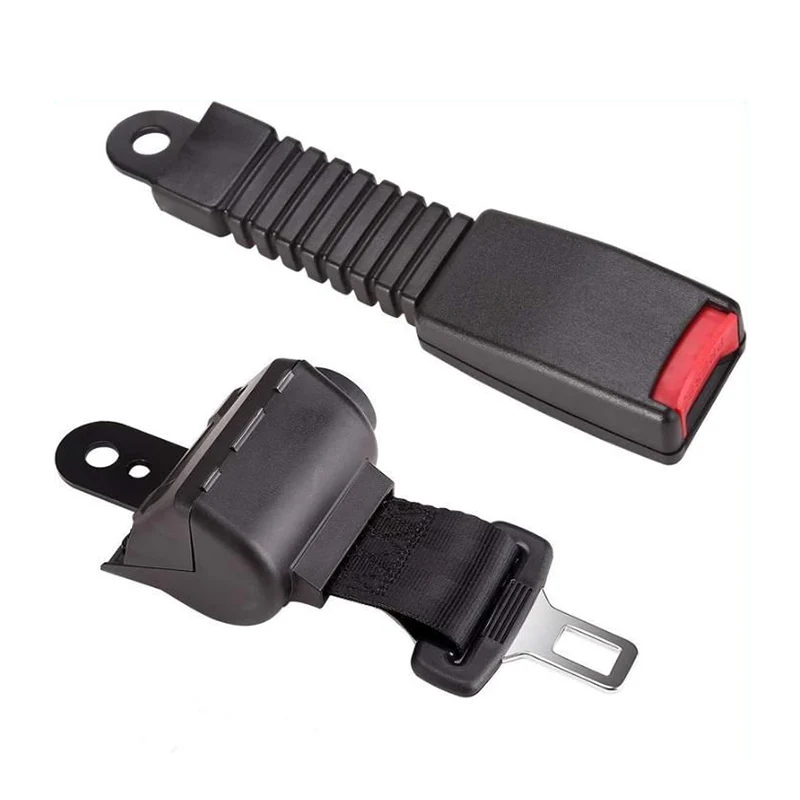
1. Understanding an Automatic Two-Point Seat Belt
An automatic two-point seat belt is a restraint assembly that secures an occupant across the pelvic area using two primary anchorage points. In a retractable design, a retractor manages the webbing, allowing the belt to extend for fastening and take up excess length when released or when the occupant changes position within the system's permitted range.
The term "automatic" usually refers to the webbing retraction function. It should not automatically be interpreted as meaning that the buckle fastens itself, that the belt tightens electronically, or that the assembly provides every function found in a three-point automotive seat belt. These features depend on the actual product configuration.
What Are the Main Components?
- Webbing: The woven strap that forms the main load-bearing restraint and must meet the specifications of the complete assembly.
- Retractor: The mechanism that stores the webbing and controls its extension and return.
- Buckle and latch plate: The fastening components that connect and release the belt according to the product design.
- Anchorages and mounting hardware: The structural connection points that transfer loads into the approved seat or vehicle structure.
- Optional components: Depending on the design, these may include guides, covers, sensors, or additional mounting accessories.
Each component must work as part of a compatible restraint system. A visually similar buckle, webbing strap, or retractor is not necessarily interchangeable with the original assembly.
2. How the Automatic Mechanism Works
The operating principle is relatively straightforward, but the internal mechanism must be designed for the intended application. Understanding the basic sequence helps buyers evaluate product specifications and identify possible compatibility problems.
Step 1: Webbing Extension
The occupant pulls the webbing from the retractor to obtain enough length for fastening. A properly selected assembly should provide the specified usable belt length without requiring excessive force or creating an uncomfortable fit.
Step 2: Buckle Engagement
The latch plate is inserted into the compatible buckle until the engagement mechanism locks. The user should follow the manufacturer's instructions and confirm that the connection is secure. A buckle that appears to fit but does not lock reliably is unacceptable.
Step 3: Webbing Management
The retractor takes up excess webbing according to its design. This can help reduce loose strap material and simplify routine use. The belt must still be positioned correctly across the pelvis, without twisting, folding, or routing it around unsuitable obstructions.
Step 4: Restraint Under the Intended Conditions
The locking behavior depends on the particular retractor and its engineering. Some mechanisms are designed to lock in response to webbing movement or vehicle acceleration, while other configurations may use different operating principles. Buyers should confirm the exact locking characteristics instead of assuming that all automatic retractors behave identically.
3. Key Benefits for Operators and Manufacturers
When correctly specified for an approved application, an automatic two-point seat belt can help address several practical challenges faced by vehicle operators, equipment manufacturers, and maintenance teams.
Convenient Everyday Operation
A retractable design manages surplus webbing instead of leaving a long strap hanging loose. This can make entry, exit, and routine belt handling more convenient in suitable seating environments.
Improved Webbing Management
Excess belt material can become tangled, trapped, or inconvenient to store. Automatic retraction helps organize the strap when it is not in use, provided the mechanism is compatible with the mounting orientation and installation geometry.
Potentially Simpler Routine Maintenance
A suitable assembly can make everyday handling more consistent for operators. However, reduced maintenance should never be assumed without considering environmental exposure, usage frequency, cleaning procedures, and the manufacturer's inspection requirements.
Flexible Product Selection
Manufacturers and replacement-parts buyers may be able to specify webbing length, buckle configuration, mounting arrangements, or other available options. Actual customization depends on the supplier's product range and must preserve the safety performance of the complete assembly.
Better Procurement Planning
Identifying the required specifications before ordering helps reduce incorrect deliveries, installation delays, and unnecessary replacement costs. For distributors and OEM buyers, a documented specification is particularly valuable when sourcing products across multiple vehicle models or production batches.
4. Suitable Applications and Important Limitations
Two-point seat belts are used in certain seating and equipment applications where the restraint design is appropriate for the occupant, vehicle, and applicable regulations. Automatic retractable versions may be considered when convenient webbing management is also required.
| Application | Potential Requirement | What Buyers Must Verify |
|---|---|---|
| Special-purpose vehicles | Practical restraint for a designated seat | Approved belt type, occupant protection requirements, and anchorage design |
| Industrial or utility equipment | Reliable restraint during intended operation | Equipment-specific specifications, vibration exposure, and mounting strength |
| Selected commercial vehicles | Consistent operation and manageable webbing | Vehicle approval, seating configuration, and applicable regulations |
| Replacement-parts supply | Compatibility with the existing restraint system | Part number, dimensions, buckle interface, retractor orientation, and approval status |
| OEM production projects | Repeatable specifications and supply consistency | Engineering drawings, test documentation, batch traceability, and change control |
These examples are starting points for technical evaluation, not a declaration that one belt fits every application. The restraint system specified by the vehicle or equipment manufacturer takes priority.
When Is a Two-Point Belt Not the Right Choice?
A two-point belt restrains the occupant across the pelvis but does not provide the upper-torso restraint of a three-point belt. It must not be treated as a universal replacement for a three-point or multi-point system.
For road vehicles, passenger transport, or other regulated uses, the required restraint configuration depends on vehicle category, seating position, local regulations, and applicable approval requirements. Never replace an original belt with a two-point model solely because its mounting holes or buckle appear compatible.
5. Automatic Two-Point vs. Other Seat Belt Types
Different seat belt configurations solve different restraint and operating requirements. Comparing their functions helps purchasing teams avoid selecting a product based on convenience alone.
| Seat Belt Type | Basic Configuration | Main Consideration |
|---|---|---|
| Automatic two-point seat belt | Lap restraint with a retracting mechanism | Verify locking behavior, pelvic fit, and application suitability |
| Fixed two-point seat belt | Lap restraint adjusted manually | Confirm correct adjustment and suitable webbing length |
| Three-point seat belt | Restraint across the pelvis and upper torso | Check shoulder routing, retractor design, and vehicle approval |
| Four-point or five-point harness | Multiple restraint straps | Requires a system specifically engineered for its intended seat and application |
No configuration is universally best. The correct choice is the one that meets the intended restraint requirements, fits the approved mounting arrangement, and complies with the relevant regulations. A retractable two-point belt should not be marketed or purchased as offering the same protection as a three-point belt without supporting product-specific evidence.
6. How to Choose the Right Automatic Two-Point Seat Belt
For B2B buyers, the most effective selection process starts with the installation environment and the required performance rather than the lowest unit price. The following checkpoints can help reduce sourcing risks.
1. Confirm the Intended Application
Identify the vehicle or equipment model, seating position, expected operating conditions, and applicable restraint requirements. Provide these details to the supplier before requesting a quotation.
2. Verify Webbing Length and Dimensions
Check the available webbing length, width, adjustment range, and routing requirements against the approved installation. The belt should fit the intended occupant and seating geometry without forcing the webbing into an unsuitable position.
3. Examine Retractor Performance
Ask how the retractor operates, which mounting orientations are permitted, how it locks, and what performance documentation is available. Retraction speed alone does not establish restraint performance.
4. Check Buckle and Anchorage Compatibility
Confirm the buckle interface, latch plate, mounting-hole dimensions, bolt specifications, and required anchorage strength. Do not modify structural anchorages or substitute mounting hardware without engineering approval.
5. Review Webbing and Component Quality
Ask about webbing material, abrasion resistance, environmental suitability, buckle durability, corrosion protection, and the quality controls applied to finished assemblies. Relevant evidence should match the actual product being purchased.
6. Verify Certifications and Test Reports
Request the applicable certificates, approval markings, test reports, and product identification information. Confirm that the documentation covers the specific model and intended application, and that it is accepted in the destination market.
7. Evaluate Customization and Supply Capability
OEM buyers should discuss drawings, samples, minimum order quantities, lead times, packaging, labeling, and batch consistency. Any engineering change affecting a restraint assembly should be reviewed and documented before mass production.
- Intended vehicle or equipment confirmed
- Required restraint configuration verified
- Webbing dimensions and length checked
- Retractor operation and orientation confirmed
- Buckle and anchorages matched
- Relevant approvals and test documents reviewed
- Sample, quotation, and delivery requirements agreed
7. Installation and Maintenance Essentials
Even a correctly selected seat belt can perform poorly if it is installed incorrectly or used with damaged components. Installation should be completed by qualified personnel in accordance with the vehicle manufacturer's instructions and the belt assembly's approved documentation.
Installation Best Practices
- Follow the approved mounting arrangement. Use the specified anchorages, fasteners, torque values, and mounting orientation. Do not improvise a new installation layout.
- Prevent webbing twists. The strap should follow the specified routing path and lie flat wherever required.
- Check buckle engagement. Confirm that the latch plate engages and releases as instructed and that the buckle is accessible to the occupant.
- Verify retractor operation. Check webbing extension, return, and the specified locking behavior using the manufacturer's test procedure.
- Inspect surrounding components. Ensure the webbing is not pinched by seat frames, sharp edges, trim panels, or moving mechanisms.
- Document the installation. Record the part identification and any inspection or commissioning checks required by the maintenance process.
Routine Inspection and Care
Inspection frequency should reflect the manufacturer's instructions, operating environment, and applicable maintenance rules. High-use equipment may require more frequent checks than lightly used equipment.
- Inspect the webbing for cuts, fraying, pulled stitching, contamination, discoloration, or other deterioration.
- Check the buckle and latch plate for visible damage, deformation, corrosion, or unreliable engagement.
- Look for loose anchorages, damaged mounting points, or evidence of unauthorized modification.
- Check whether the webbing retracts smoothly and whether the locking mechanism behaves as specified.
- Keep the belt clean using only approved cleaning methods and materials.
- Remove damaged or questionable assemblies from service until they have been assessed according to the applicable procedures.
8. Purchasing an Automatic Two-Point Seat Belt: What B2B Buyers Should Prepare
Incomplete specifications are a common source of delays in industrial and automotive component procurement. Buyers can improve quotation accuracy by preparing a clear request for information before contacting manufacturers.
Information to Include in an RFQ
- Product name and required restraint configuration.
- Vehicle or equipment application and intended seating position.
- Required webbing length, width, color, and adjustment range.
- Buckle style, mounting arrangement, and retractor orientation.
- Applicable standards, certification requirements, and destination market.
- Estimated order quantity, sample quantity, and expected repeat-order volume.
- Packaging, labeling, delivery location, and required delivery schedule.
- Drawings, photographs, existing part numbers, or reference samples, where available.
Why Supplier Evaluation Matters
A suitable supplier should be able to explain product configurations, identify compatibility questions, provide relevant technical documents, and clarify which requirements need engineering confirmation. Buyers should also review quality-control procedures, traceability arrangements, change management, and the process for handling nonconforming products.
For larger orders, agree on the approved sample and specification before production. Documented acceptance criteria help both parties reduce misunderstandings and maintain consistency across repeat purchases.
Working with Chuanghecheng
Chuanghecheng manufactures seat belt assemblies and offers different belt configurations, including two-point and three-point products. Its product range serves a variety of vehicle and equipment applications.
For buyers sourcing an Automatic Two-Point Seat Belt, the next step is to provide the intended application, required dimensions, buckle and mounting details, and applicable approval requirements. This information helps the supplier determine whether a listed model meets the project needs or whether further technical clarification is necessary.
Product availability, customization options, lead times, and supporting documentation should be confirmed directly for the specific model and order.
9. Frequently Asked Questions
Q1. What is an Automatic Two-Point Seat Belt?
An Automatic Two-Point Seat Belt is generally a lap-style restraint with two primary anchorage points and a retracting mechanism that manages the webbing. Its exact operating and locking features depend on the model.
Q2. Does an automatic two-point seat belt fasten itself?
Not necessarily. In most retractable designs, "automatic" refers to webbing retraction rather than automatic buckle engagement. The occupant generally still needs to connect the latch plate to the buckle and verify that it is secured.
Q3. Is a two-point seat belt equivalent to a three-point seat belt?
No. A two-point belt restrains the pelvic area, while a three-point belt also provides upper-torso restraint. They should not be treated as interchangeable. Always use the restraint configuration approved for the vehicle and seating position.
Q4. Can an automatic two-point seat belt be installed in any vehicle?
No. Compatibility depends on the vehicle structure, anchorages, seating geometry, retractor orientation, buckle interface, and applicable regulations. Obtain approval for the intended application before installation.
Q5. What should buyers check before ordering?
Confirm the application, webbing dimensions, buckle type, mounting configuration, retractor behavior, applicable certifications, quality documentation, quantity, and delivery requirements. Drawings or reference samples can help clarify specifications.
Q6. How can buyers determine whether the retractor is suitable?
Review the manufacturer's technical documentation for permitted mounting orientations, locking characteristics, installation requirements, and test results. Do not rely solely on a visual inspection or a generic description of the mechanism.
Q7. When should a seat belt be replaced?
Replacement may be necessary when the belt has damaged webbing, defective stitching, buckle problems, unreliable retraction, damaged mounting components, or a history of an event requiring replacement under the manufacturer's instructions. Follow the relevant service requirements.
Q8. Can Chuanghecheng supply seat belts for OEM projects?
Chuanghecheng offers a range of seat belt assemblies for different applications. OEM buyers should contact the company with project specifications to confirm the availability of the required configuration, customization scope, minimum order quantity, and supporting technical documentation.
Q9. What documents should accompany a bulk order?
Depending on the application and destination market, buyers may need product specifications, approved drawings, relevant certificates, test reports, inspection records, batch identification, and installation instructions. Confirm the exact documentation requirements before placing the order.
10. Make a More Informed Seat Belt Purchasing Decision
Selecting the right Automatic Two-Point Seat Belt starts with understanding how the retractor works, where the restraint will be installed, and which safety requirements apply. Webbing dimensions, buckle compatibility, anchorage design, locking behavior, and product documentation all deserve attention before a purchasing decision is made.
For fleet operators, equipment manufacturers, and distributors, a clearly defined specification can help prevent incorrect orders, simplify installation planning, and improve consistency across future purchases. Equally important, the final assembly must be installed and maintained according to the approved requirements for its intended use.
Looking for a Reliable Seat Belt Supply Partner?
Chuanghecheng supports buyers looking for seat belt assemblies for automotive and specialized equipment applications. Share your required configuration, dimensions, application details, and order quantity so the team can help clarify the available options.
Contact us to discuss your Automatic Two-Point Seat Belt requirements, request product information, and explore a suitable solution for your project.
Contact ChuanghechengConfirm product compatibility, technical specifications, and applicable approvals before ordering or installation.