
Efficient material transportation is essential for industries that handle bulk materials, heavy loads, and products across different elevations. In mining, agriculture, construction, recycling, and manufacturing, conventional flat conveyor belts may not provide sufficient stability when transporting materials on inclined or steep routes. This is where a Cleated and Sidewall Conveyor Belt becomes an effective solution. Designed with raised cleats and flexible sidewalls, this specialized conveyor belt helps prevent material spillage, improves conveying stability, and supports continuous transportation in demanding working environments. Qingdao Zhongye Yufeng Tape Co.,Ltd. focuses on conveyor belt solutions that address industrial material handling requirements, helping customers improve transportation efficiency and adapt to different operating conditions.
1. Understanding the Structure of Cleated and Sidewall Conveyor Belts
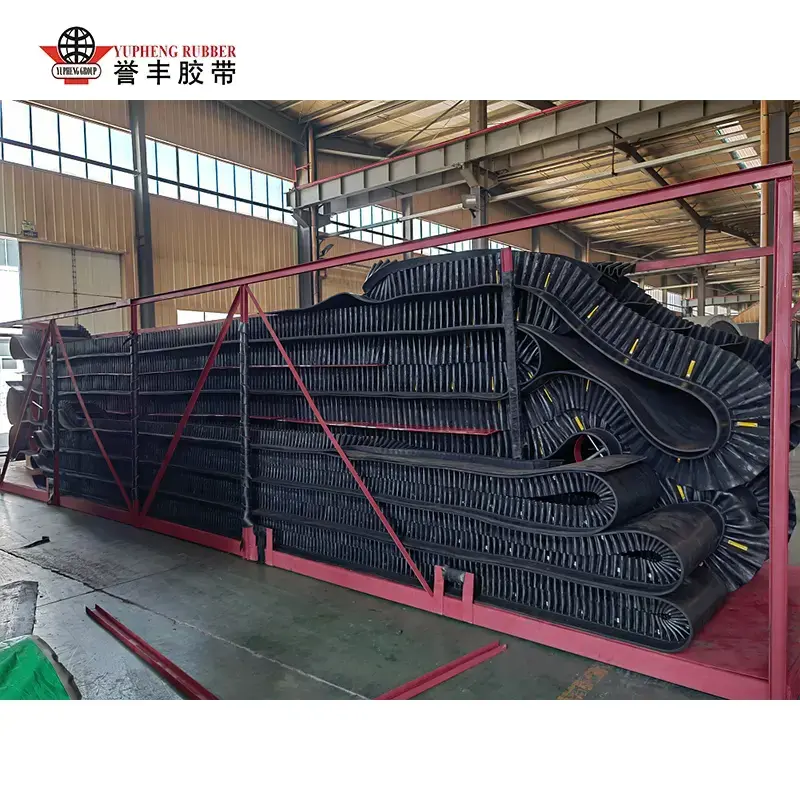
A Cleated and Sidewall Conveyor Belt combines two functional components: transverse cleats and corrugated sidewalls. Each component serves a different purpose, and their coordinated design makes the belt suitable for transporting bulk materials at various inclinations.
Transverse Cleats for Better Material Grip
Cleats are raised structures attached to the belt surface at specific intervals. They act as barriers that help hold materials in position during transportation, reducing backward movement when the conveyor operates at an incline. Depending on the material characteristics and application requirements, cleats can be designed in different shapes, heights, and spacing configurations.
Corrugated Sidewalls for Material Containment
Sidewalls are flexible, corrugated structures installed along both edges of the conveyor belt. They create additional containment space and help prevent bulk materials from falling off the sides. Their flexible construction allows the belt to operate through different conveyor configurations while maintaining effective material retention.
How These Components Work Together
When cleats and sidewalls are combined, they form a continuous conveying surface with improved load retention. The cleats help control material movement along the belt, while the sidewalls provide lateral protection. This combination is particularly useful for handling granular, powdered, and irregularly shaped materials.
2. Key Advantages in Industrial Material Transportation
Compared with conventional flat conveyor belts, a Cleated and Sidewall Conveyor Belt offers several practical advantages, especially in applications where space, conveying angles, and material stability are important.
- Steep-angle conveying: Supports material transportation on inclined routes, helping industries make better use of available installation space.
- Reduced material spillage: Corrugated sidewalls help contain materials and minimize losses during transportation.
- Improved conveying stability: Cleats help prevent materials from sliding backward, supporting more consistent transportation.
- Space-saving system design: Enables vertical or steep-incline conveying configurations that may reduce the need for lengthy horizontal conveyor systems.
- Continuous operation: Helps maintain a stable material flow in industrial production and bulk handling processes.
- Flexible application options: Different belt configurations can be selected according to material properties, conveying capacity, and operating conditions.
These advantages make sidewall conveyor systems a valuable option for facilities seeking to improve productivity while controlling material loss and equipment space requirements.
3. Where Are Cleated and Sidewall Conveyor Belts Used?
Due to their material-retaining structure and adaptable conveying design, these belts are suitable for a wide range of industrial applications.
| Industry | Typical Materials | Main Application Benefits |
|---|---|---|
| Mining | Coal, ores, minerals, and crushed rocks | Supports steep-angle transportation and reduces material loss. |
| Agriculture | Grain, seeds, fertilizers, and agricultural products | Helps maintain stable transportation of bulk materials. |
| Construction | Sand, gravel, cement materials, and aggregates | Facilitates material transfer between different elevations. |
| Recycling | Recyclable waste, plastic particles, and industrial residues | Improves material containment during continuous conveying. |
| Manufacturing | Raw materials, production components, and bulk products | Supports efficient material feeding and production workflows. |
For each application, selecting the appropriate belt structure and specifications is essential. Material size, density, moisture content, conveying angle, and operating environment should all be considered before choosing a suitable conveyor belt.
4. Important Factors When Selecting a Cleated and Sidewall Conveyor Belt
Choosing the right conveyor belt involves more than simply considering its width or overall length. A properly configured system should match the characteristics of the transported materials and the requirements of the production line.
Material Characteristics
Different materials require different belt configurations. Heavy, abrasive, wet, or fine-grained materials may place different demands on the belt surface, cleats, and sidewalls. Understanding these characteristics helps determine the appropriate construction and material selection.
Cleat Height and Spacing
Cleat dimensions influence how effectively materials are supported during inclined transportation. Their height, shape, and spacing should be selected according to particle size, load volume, and conveying angle.
Sidewall Height and Flexibility
Sidewall height affects the belt's material containment capacity. Adequate flexibility is also important for ensuring smooth operation through the conveyor system's intended configuration.
Operating Environment
Temperature, humidity, exposure to oils, and abrasive conditions can influence belt performance and service life. Selecting a suitable belt construction helps improve operational reliability under specific working conditions.
Conveyor System Compatibility
The belt should be compatible with the conveyor frame, pulleys, drive system, and installation layout. Proper matching helps reduce unnecessary wear and supports stable system operation.
5. The Importance of Quality and Manufacturing Expertise
The performance of a Cleated and Sidewall Conveyor Belt depends not only on its design but also on manufacturing quality. Reliable bonding between the belt base, cleats, and sidewalls is important for maintaining structural integrity during repeated operation.
Consistent production processes and appropriate material selection help reduce the risk of premature wear, component separation, and unexpected maintenance. For industrial buyers, working with an experienced conveyor belt manufacturer can make it easier to identify suitable specifications and develop solutions for specific material handling requirements.
Qingdao Zhongye Yufeng Tape Co.,Ltd. is committed to providing conveyor belt products for industrial material transportation applications. By focusing on practical product requirements and application-oriented solutions, the company aims to support customers in selecting conveyor belts that match their equipment configurations and working environments.
6. How Can Proper Maintenance Extend Conveyor Belt Service Life?
Even a well-designed conveyor belt requires regular inspection and maintenance to maintain its performance. Establishing a preventive maintenance routine can help identify potential problems before they cause unexpected production interruptions.
- Inspect cleats and sidewalls: Check for cracks, deformation, wear, or signs of separation.
- Monitor belt alignment: Ensure the belt runs smoothly without excessive deviation or edge friction.
- Check belt tension: Maintain appropriate tension according to the conveyor system manufacturer's recommendations.
- Remove accumulated materials: Clean the belt and surrounding equipment to prevent unnecessary buildup.
- Inspect connecting components: Regularly examine joints, pulleys, rollers, and other critical parts.
- Schedule preventive maintenance: Establish inspection intervals based on operating intensity and environmental conditions.
These maintenance practices help improve operational stability, reduce avoidable downtime, and support a longer service life for the complete conveyor system.
7. Why Choose the Right Conveyor Belt Partner?
Industrial material handling requirements vary significantly between projects. A suitable conveyor belt solution should take into account the transportation distance, installation angle, material characteristics, production capacity, and operating environment.
Qingdao Zhongye Yufeng Tape Co.,Ltd. understands the importance of matching conveyor belt performance with actual industrial applications. For buyers evaluating a Cleated and Sidewall Conveyor Belt, professional product selection and clear technical communication are important steps toward achieving efficient and reliable material transportation.
Whether the requirement involves mining, agricultural processing, construction materials, or general industrial conveying, selecting a belt with suitable cleat dimensions, sidewall construction, and overall specifications can contribute to better material handling performance.
Conclusion
A Cleated and Sidewall Conveyor Belt provides an effective solution for transporting bulk materials on inclined and steep-angle conveyor systems. By combining transverse cleats with corrugated sidewalls, it helps improve material retention, reduce spillage, optimize installation space, and support continuous industrial operations. From product structure and application compatibility to manufacturing quality and routine maintenance, every factor contributes to overall conveyor system performance.
Qingdao Zhongye Yufeng Tape Co.,Ltd. is ready to support industrial buyers looking for suitable conveyor belt solutions. If you are planning a new conveyor project or upgrading an existing material handling system, contact us today to discuss your application requirements, explore suitable Cleated and Sidewall Conveyor Belt options, and find a practical solution for your business.