

How does a Fall Prevention Safety Net reshape real-world jobsite safety without slowing work?
2025-12-11
When I first looked at perimeter protection for a fast-moving project, I needed something that didn’t nag the crew or stall the schedule. That’s when I started comparing options from Yisen and learned how a Fall Prevention Safety Net can act like a quiet teammate—always on, rarely in the way. Over several deployments I refined a simple approach: pick a net with the right mesh and energy absorption, keep installation straightforward, and document compliance so audits become easy. This is the playbook I now share with safety leads who want protection that’s practical, not performative—and yes, it centers on the Fall Prevention Safety Net done right.
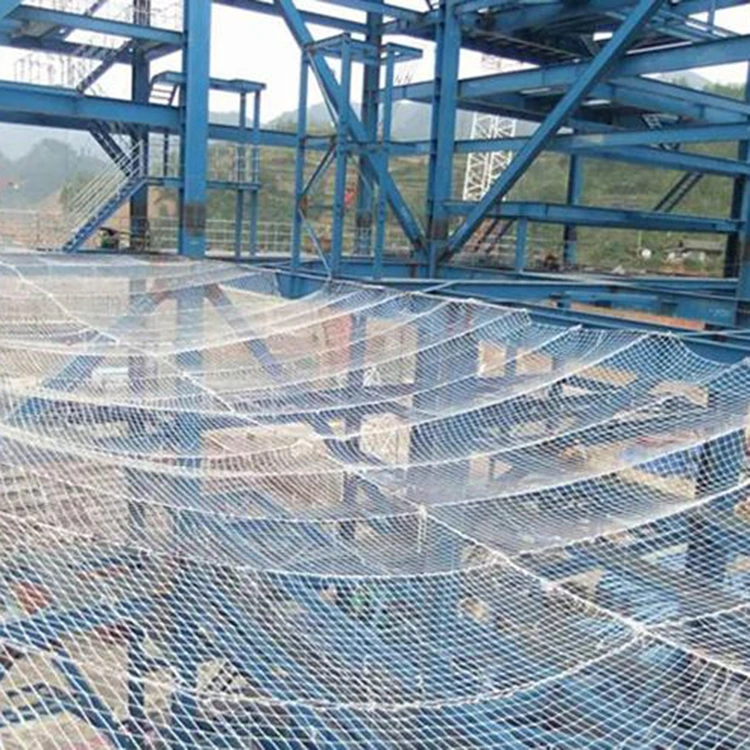
What pain points does a Fall Prevention Safety Net actually remove?
- Daily workflow friction — the Fall Prevention Safety Net covers open edges and voids so workers aren’t constantly clipping and unclipping in congested areas.
- Compliance headaches — documented mesh strength and knot stability simplify inspections and client sign-offs.
- Rework from dropped tools — edge nets with debris liners reduce damage and near-miss reports.
- Schedule slips — rapid rigging trims the time between structural progress and safe access.
- Budget creep — durable fibers and UV stability cut mid-project replacements.
Why do I prioritize energy absorption and mesh stability when choosing a net?
I learned the hard way that tensile strength alone isn’t the full story. In a real fall, the system must absorb energy, spread load to anchors, and prevent tear propagation. That’s why I check dynamic performance, not just static ratings, whenever I spec a Fall Prevention Safety Net. A stable, low-creep mesh maintains geometry under load so there’s less risk of elongation that reduces edge clearance.
Which specifications do I verify before sign-off?
- Material family: high-tenacity PP or PA with UV inhibitors, low water absorption, and consistent knot strength.
- Mesh size versus object control: smaller mesh for tool control near the façade, larger mesh for general fall arrest.
- Border rope and stitching: reinforced periphery for even load distribution into anchors.
- Traceability: batch tags and test reports mapped to delivery lots.
- Fire behavior and weathering: rating and accelerated aging data matching site conditions.
How do different configurations compare in practice?
| Configuration | Typical Mesh | Material | Edge Treatment | Best Use Case | Install Time | Notes |
|---|---|---|---|---|---|---|
| Perimeter catch net | 60–100 mm | High-tenacity PP | Border rope + thimble corners | Slab edges, façades | Fast | Pairs well with guardrails for layered control |
| Void/shaft cover net | 45–60 mm | PA or PP | Rigid bar or sling integration | Stair/MEP openings | Moderate | Walkable covers require engineered support |
| Debris liner add-on | < 10 mm | Monofilament liner | Sewn to primary net | Tool and material retention | Fast | Reduces façade damage from drops |
| Custom panel kit | Project-specific | UV-stabilized blend | Pre-fitted hardware | Irregular edges | Fast | Less trimming on site, cleaner inspections |
What installation sequence has proven the least disruptive on busy sites?
- Pre-survey the anchor line and edge loading; confirm slab strength and anchor spacing.
- Stage nets in labeled bundles; pre-attach corner thimbles and border ropes.
- Rig top anchors first, then tension bottom ties to remove slack without over-tightening.
- Overlap panels by at least one mesh square and secure with continuous lacing.
- Document with photos and a short checklist so daily inspections are simple.
Following this order keeps trades moving while the Fall Prevention Safety Net goes in behind them. It’s the difference between a safety add-on and an integrated control.
How do I justify the cost to stakeholders who only see line items?
- Near-miss reduction: fewer dropped-object incidents translate into avoided downtime and claims.
- Inspection efficiency: standardized tags and reports cut audit time.
- Crew confidence: when edges look controlled, productivity improves at height.
- Asset longevity: UV-stable fibers extend service intervals.
On projects where I deployed a Fall Prevention Safety Net early, I saw fewer barricade reworks and faster façade access. The ROI showed up as schedule reliability, not just invoice math.
What simple daily checklist keeps a net system reliable?
- Look for cuts, abrasions, or heat damage across high-traffic edges.
- Check anchor points, knots, and lacing continuity at overlaps.
- Verify tag readability and that panels match the latest layout.
- Confirm clear fall paths and that no materials have loaded the net unintentionally.
- Record a quick photo log and sign off before work at height begins.
A two-minute pass finds 95% of issues before they matter. Consistent checks keep the Fall Prevention Safety Net ready without adding bureaucracy.
Where does the Yisen approach fit into my specification?
When I source from providers like Yisen, I focus on three things: verified dynamic performance, border reinforcement that spreads load evenly, and clean documentation. Those traits make a Fall Prevention Safety Net easier to approve, faster to rig, and tougher over a long schedule. Add optional debris liners and pre-fitted hardware, and site teams spend their time building, not improvising.
What final advice would I give a project lead starting next week?
- Lock your edge and void map first; buy panels to the map, not the other way around.
- Choose the Fall Prevention Safety Net model for the work phase, then scale it with liners as trades stack up.
- Train one crew to own the rigging standard for consistency across floors.
- Keep spare ties and repair kits at foreman stations to cut small delays.
Do this and the Fall Prevention Safety Net becomes part of the site rhythm—present, trusted, almost invisible.
Would you like a tailored specification and quotation that matches your site conditions?
If you’re planning a deployment or need help matching mesh, anchors, and documentation to your authority’s requirements, I can share a short spec template and cost ranges based on your drawing set. Tell me your edge lengths, target standards, and timeline, and I’ll map a straightforward package around a proven Fall Prevention Safety Net. For a fast response, contact us with your project details or send a takeoff; let’s turn safety from a hurdle into an advantage.