

Is an Explosion Proof Button the Smallest Upgrade That Can Prevent Your Next Shutdown?
2025-12-17
I’ve learned the hard way that “it’s just a button” is the kind of sentence that shows up right before a costly stop, a safety audit headache, or a rushed replacement order. When I started comparing options, I kept circling back to how a brand like YXFB approaches hazardous-area control components with a practical, industrial mindset, especially when the application demands a dependable Explosion Proof Button that people will press thousands of times without thinking twice.
If you’re sourcing for oil & gas, chemical processing, mining, pharmaceuticals, paint shops, grain handling, or any environment where flammable gas or combustible dust is a real factor, this guide is for you. I’ll walk through what I check, what buyers often miss, and how I evaluate product advantages.
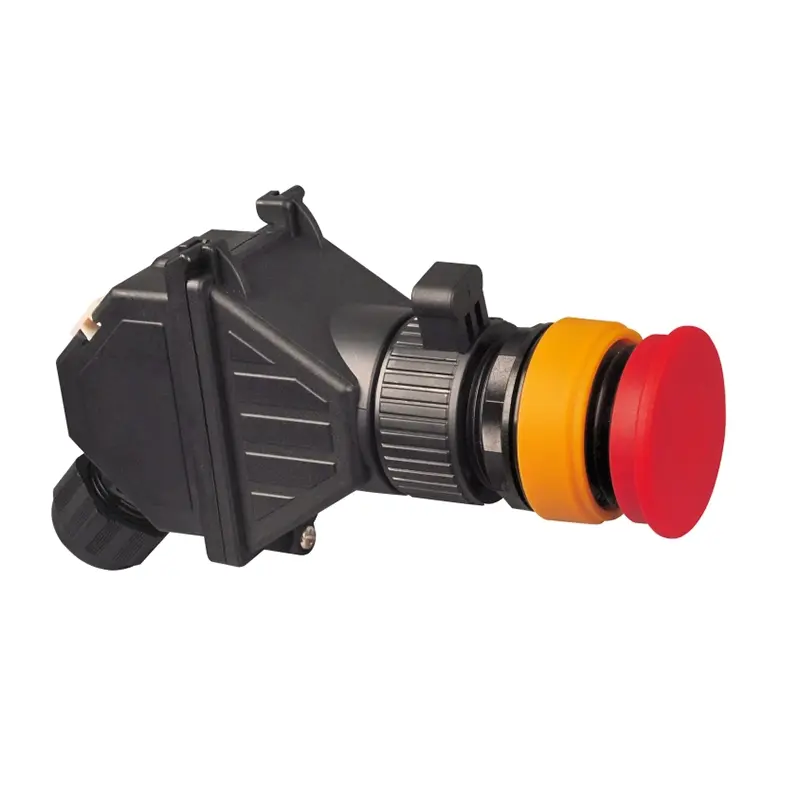
What problems does an Explosion Proof Button actually solve in the field?
In hazardous areas, the button is not only a control point, it’s a risk boundary. A properly selected Explosion Proof Button helps you reduce three pain points I see again and again:
- Unexpected downtime from “simple” electrical failures like intermittent contact, corrosion, or dust ingress.
- Safety exposure when the enclosure, sealing, or wiring method isn’t suited to the zone, gas group, or dust conditions.
- Maintenance overload when the button is hard to replace, hard to identify, or not modular enough for fast servicing.
In plain terms, the goal is easy to say and harder to execute: I want a button that stays consistent under repeated operation, stays protected against the environment, and stays compliant with the site’s hazardous-area requirements.
How do I choose an Explosion Proof Button without guessing or overbuying?
I start with the application reality, not the catalog. Here’s the short checklist I use before I even look at photos:
- Where will it live indoors, outdoors, washdown area, salty air, high vibration, high dust, high humidity?
- What is the task start/stop control, reset, emergency stop, interlock confirmation, line enable?
- Who will press it operators with gloves, technicians during maintenance, emergency responders?
- How often is it used occasional, daily, continuous operations with frequent actuation?
- What wiring logic is required normally open, normally closed, or a combination?
- What mounting style fits your panel front-of-panel access, rear wiring space, cable entry direction?
Once I have those answers, selecting an Explosion Proof Button stops feeling like gambling and starts feeling like engineering.
Which technical details matter most when comparing an Explosion Proof Button?
When buyers get burned, it’s usually because a “checkbox spec” didn’t match the real environment. These are the details I watch closely:
- Enclosure concept and construction rugged housing, stable structure, and materials suitable for corrosion, impact, and temperature swings.
- Sealing approach gaskets, gland options, and realistic protection against water jets and fine dust where needed.
- Contact reliability stable conduction, reduced oxidation risk, and consistency under repeated pressing.
- Actuation feel and ergonomics decisive click, glove-friendly head size, anti-slip surface options.
- Serviceability modular components, replaceable blocks, easier identification and maintenance access.
- Compatibility fit with your control box, control station, or explosion-proof panel design philosophy.
If you’re sourcing globally, I also recommend aligning early on certification expectations (your site standard, your EPC requirements, and your end user’s audit habits). I don’t treat certification as decoration, I treat it as a project constraint.
What types of Explosion Proof Button configurations do I see buyers request most often?
In purchasing conversations, these are the common “workhorse” requests that keep coming up:
- Emergency stop for rapid shutdown, usually with a high-visibility head and intuitive operation.
- Start and stop pair for equipment control on skids, pumps, conveyors, and process lines.
- Reset for fault recovery workflows and maintenance procedures.
- Illuminated options when operators need quick visual confirmation of status or mode.
- Dual-function arrangements when panel space is tight but the operator needs multiple actions.
I’m deliberately not treating these as “one-size-fits-all.” In reality, your button choice depends on how your control circuit is designed, how the operator behaves under stress, and how your maintenance team wants to troubleshoot.
Can a quick comparison table make Explosion Proof Button sourcing less painful?
Yes, if you compare what actually drives field performance. Here’s a practical table I use when aligning specs with real-world use:
| What I compare | What it affects | What I ask the supplier |
|---|---|---|
| Mounting method | Installation time, panel fit, maintenance access | Is it front access, rear access, or modular with flexible mounting? |
| Contact configuration | Control logic, safety interlocks, fail-safe behavior | Can I choose NO, NC, or mixed contacts to match my circuit? |
| Ingress protection approach | Dust and moisture resistance, long-term stability | What sealing and gland options are available for my environment? |
| Materials and surface durability | Corrosion resistance, impact resistance, lifespan | Which housing materials are available and where do you recommend each? |
| Operational feel | Operator confidence, error reduction, glove use | What head styles and sizes do you offer, and how do they behave under frequent use? |
| Serviceability | Downtime during replacement, spare parts strategy | Can I replace blocks or modules quickly without rewiring everything? |
If a supplier can answer these cleanly, it’s a good sign. If they dodge, I slow the conversation down, because it usually means you’ll pay for the missing clarity later.
Why does “frequent operation” break ordinary buttons and how does an Explosion Proof Button help?
Frequent operation creates boring, expensive failure modes: micro-arcing, contact wear, oxidation, vibration loosening, and mechanical fatigue. The operators don’t notice until the control signal becomes inconsistent, and then everyone blames “the system” instead of the tiny part that actually failed.
A well-designed Explosion Proof Button focuses on durability where it matters: stable contact behavior, robust mechanical structure, better sealing against contaminants, and a design that keeps performance consistent after repeated pressing. That consistency is the whole point.
What buyer mistakes do I see most often when ordering an Explosion Proof Button?
- Choosing by appearance because the head looks nice, even though the mounting and wiring don’t match the panel.
- Ignoring the environment like humidity, washdown, dust, or salt spray, then acting surprised when failures happen early.
- Not specifying contact logic and assuming NO/NC is “standard,” which causes circuit redesign or site rework.
- Underestimating maintenance needs and choosing a design that takes too long to replace during a stop.
- Forgetting human factors like gloves, emergency reaction time, or the operator’s line-of-sight.
If you’re trying to prevent project delays, I suggest locking in the “must-not-change” requirements first (mounting, contact logic, environment, compliance expectations) and only then discussing options like head style and illumination.
How do I evaluate product advantages without falling for marketing language?
Here’s my rule: if an advantage can’t be explained as a measurable field outcome, it’s not an advantage yet. The product strengths I care about usually show up in outcomes like:
- Fewer nuisance stops because the actuation and signal are consistent.
- Lower maintenance frequency because sealing and materials match the environment.
- Faster replacement because parts are modular and well-labeled.
- Clearer operation because the button is easier to use correctly under pressure.
This is where I like working with suppliers who think like manufacturers, not resellers. If you tell me how your Explosion Proof Button is built for reliability, and you can map that back to my application, we’ll get along.
What should I send in an inquiry to get the right Explosion Proof Button the first time?
If you want a fast, accurate quotation instead of a long back-and-forth, here’s what I recommend including:
- Hazardous area details (zone or division, gas/dust presence, site standard)
- Function needed (start/stop, reset, emergency stop, illuminated or not)
- Contact requirement (NO, NC, combination)
- Mounting preference (panel style, space constraints, cable entry direction)
- Environment notes (outdoor, washdown, high dust, corrosive atmosphere)
- Quantity, target lead time, and any OEM labeling needs
When I send that, suppliers like YXFB can respond with the right configuration options instead of guessing. And yes, I’m picky, because replacing the wrong button later is always more expensive than choosing correctly now.
Ready to spec the right Explosion Proof Button for your project?
If you’re comparing options and want a recommendation that matches your site conditions, send me your application details and the control logic you need. I’m happy to help you narrow it down to a practical, field-friendly configuration. For OEM needs, custom marking, mounting preferences, or contact combinations, contact us with your requirements and we’ll move quickly from “maybe” to a clear selection and quotation for your next Explosion Proof Button.