

A shackle mount bracket is a connection component designed to provide a mounting point for a compatible shackle in equipment, vehicle recovery systems, industrial assemblies, and other applications. Although the component may look simple, its dimensions, material, mounting arrangement, and load rating can directly affect connection reliability and operational safety.
This guide explains how shackle mount brackets work, which specifications deserve attention, how to assess material and construction quality, and what buyers should verify before placing an order. Whether you are sourcing hardware for industrial equipment, off-road vehicles, or specialized assemblies, understanding these factors can help reduce compatibility problems, unnecessary replacement costs, and avoidable downtime.
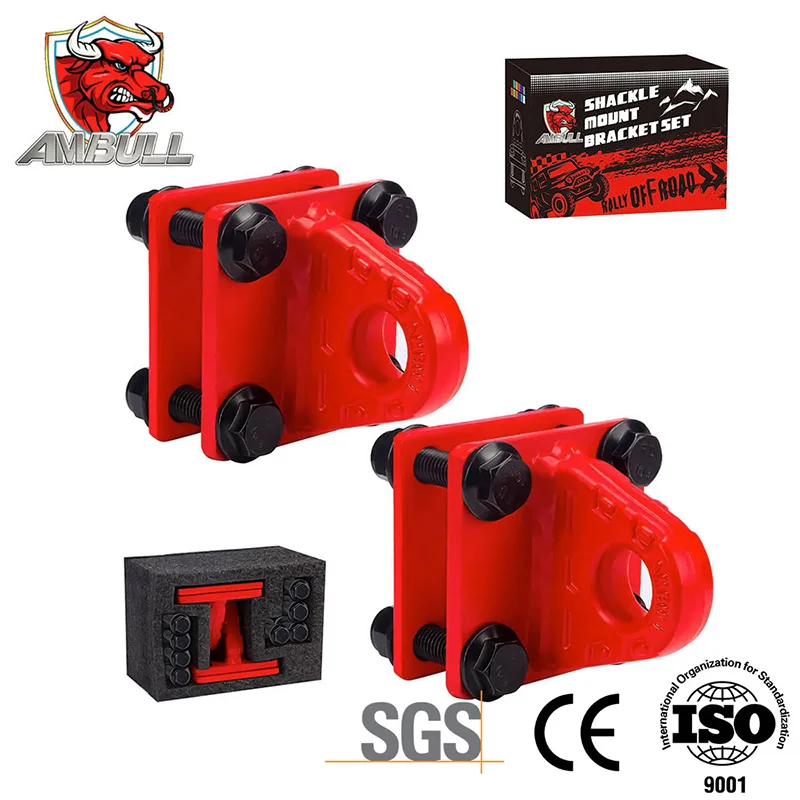
1. What Is a Shackle Mount Bracket?
A shackle mount bracket is a structural mounting component that supports the attachment of a compatible shackle to a designated piece of equipment or supporting structure. Depending on its design, it may be installed on a vehicle frame, equipment chassis, fabricated steel assembly, or another engineered mounting surface.
The shackle provides a connection point for an appropriate pin, link, or compatible attachment. The bracket establishes the interface between that connection and the structure carrying the load. Both components must be suitable for the intended application.
Understanding the Main Components
- Mounting body: The main structure that transfers forces into the supporting assembly.
- Shackle opening: The opening or interface that accommodates the specified shackle geometry.
- Pin or attachment interface: The feature that allows a compatible shackle to be secured according to its design.
- Mounting holes: Holes or other approved fixing features used to attach the bracket to the designated structure.
- Reinforcement features: Ribs, gussets, additional plate thickness, or other design elements that may improve structural performance when properly engineered.
- Protective finish: A surface treatment selected to help resist corrosion or environmental exposure.
2. Where Are Shackle Mount Brackets Used?
Shackle mount brackets appear in different industries because they provide a defined connection interface. However, a design suitable for one environment should not automatically be used in another. Application requirements determine the necessary geometry, material, mounting arrangement, and verified capacity.
Off-Road and Vehicle Recovery Equipment
Some brackets are designed for compatible recovery shackles used with engineered vehicle recovery points. These systems may experience substantial forces, changing load directions, shock loading, and exposure to mud, water, and road debris. The vehicle mounting structure and the recovery equipment must be designed for the intended recovery procedure.
Industrial Machinery and Fabricated Assemblies
Industrial equipment may use shackle mounting interfaces as part of a lifting, handling, positioning, or attachment system. The exact purpose matters: a bracket intended for a non-lifting attachment must not be treated as a lifting point without appropriate engineering and authorization.
Trailers and Specialized Equipment
Depending on the design, shackle brackets may be incorporated into equipment frames, towing-related assemblies, or specialized machinery. Buyers should establish whether the component is intended for towing, recovery, suspension, lifting, or another specific function. These duties can impose very different loading conditions.
Custom Fabrication and OEM Projects
Original equipment manufacturers may require brackets with particular hole spacing, plate thickness, clearance, finish, or mounting orientation. Custom components can help integrate a connection point into a product, provided the design is reviewed against the applicable loads and installation requirements.
3. How Does Construction Affect Performance?
Bracket performance depends on more than overall size or apparent thickness. Geometry, material properties, manufacturing quality, hole placement, attachment details, and the way forces travel through the assembled system all contribute to structural behavior.
Plate Thickness and Geometry
Material thickness affects stiffness and resistance to certain forms of deformation, but increasing thickness alone does not guarantee a safe design. A bracket may still fail at a narrow section, around a hole, at a weld, or where a force creates a large bending moment.
Engineers must consider the bracket's complete geometry, including edge distances, opening dimensions, transitions between sections, and the relationship between the applied force and the mounting surface.
Hole Position and Fit
Incorrect hole spacing can make installation difficult or force fasteners into an unintended position. An incompatible shackle opening can cause interference, restricted movement, or undesirable contact between components. Buyers should verify dimensional drawings rather than relying only on product photographs.
Welds and Fabricated Joints
Where welding forms part of the bracket assembly, joint design, welding procedure, workmanship, and inspection requirements matter. Weld quality should be assessed against the relevant drawings and applicable standards. A visually smooth weld is not, by itself, proof of structural adequacy.
Load Direction and Structural Support
A bracket may respond differently to tension, shear, bending, or combined forces. Off-axis loading can introduce additional stress, while a weak mounting surface can fail even when the bracket itself remains intact.
For this reason, a component's suitability should be evaluated as part of the complete assembly. If a bracket is intended for a defined loading direction, it should not be assumed safe for side loading or other unapproved configurations.
4. Which Material and Finish Specifications Matter?
Material selection influences strength, toughness, corrosion resistance, weight, manufacturability, and cost. The best choice depends on the service environment and verified design requirements rather than on a material name alone.
| Material or Finish | Potential Advantages | Points to Verify |
|---|---|---|
| Carbon steel | Commonly available, versatile, and suitable for many engineered structural designs. | Specified grade, mechanical properties, manufacturing quality, and corrosion protection. |
| Alloy steel | May provide mechanical properties suited to demanding applications when properly selected and processed. | Exact grade, heat treatment, traceability, and application-specific design requirements. |
| Stainless steel | Can offer improved corrosion resistance in suitable environments. | Specific alloy, exposure conditions, strength requirements, and possible galvanic interactions. |
| Protective coating | Can reduce environmental attack and improve surface durability. | Coating type, thickness, coverage, adhesion, and compatibility with the operating environment. |
Corrosion Protection Is a System Requirement
Moisture, road salt, chemicals, abrasion, and temperature changes can affect a bracket's service life. A suitable coating can help protect the surface, but damage to the coating, trapped moisture, crevices, and dissimilar-metal contact may create additional risks.
When sourcing hardware for outdoor or marine-adjacent use, buyers should describe the actual exposure conditions. The supplier can then identify available finishes, while the design team verifies whether the selected material and protection system meet the requirements.
Request Material Evidence
For safety-related or critical applications, ask whether material certificates, inspection reports, dimensional records, and batch traceability are available. Documentation should correspond to the actual product and its specified material, rather than to a generic product family.
5. How Can Buyers Choose the Right Bracket?
A structured selection process helps procurement teams avoid costly dimensional mismatches and unsuitable components. Before requesting a quotation, prepare the essential technical information and define which requirements are mandatory.
Step 1: Define the Intended Application
Explain whether the bracket is intended for vehicle recovery, equipment attachment, lifting-related service, towing-related service, or another purpose. Identify static and dynamic loading conditions, expected load directions, frequency of use, and relevant environmental factors.
Step 2: Establish the Required Capacity
Specify the required working load limit or other applicable capacity criterion, as appropriate to the intended application. Do not treat a breaking-load figure as an allowable working load. These values describe different things and must be interpreted according to the product's documentation and relevant standards.
Where the bracket forms part of a lifting or recovery system, use an appropriately qualified engineer or responsible technical authority to establish the design requirements and confirm system compatibility.
Step 3: Confirm the Dimensions
- Overall length, width, and height.
- Plate thickness and critical section dimensions.
- Shackle opening size and required clearance.
- Pin diameter and compatible shackle geometry.
- Mounting-hole diameter, center-to-center spacing, and edge distances.
- Mounting surface, orientation, and available installation space.
Step 4: Verify the Complete Connection
Check the bracket against the intended shackle, fasteners, backing plates, frame, and any other connecting hardware. Verify thread specifications, fastener grade, engagement, and installation requirements where applicable. A stronger-looking bracket cannot compensate for an inadequately designed supporting structure.
Step 5: Compare Quality and Total Cost
Unit price is only one part of the purchasing decision. Dimensional consistency, documented material specifications, manufacturing controls, packaging, delivery reliability, and support for nonconforming products can all affect the total cost of ownership.
| Selection Factor | Questions to Ask | Evidence to Request |
|---|---|---|
| Capacity | Is the product suitable for the specified loading conditions? | Technical data, engineering documentation, and applicable test records. |
| Dimensions | Will the bracket fit the mating components and mounting surface? | Dimensioned drawings and agreed inspection tolerances. |
| Material | Does the material meet the mechanical and environmental requirements? | Material specifications and available certificates. |
| Manufacturing | Are critical dimensions and joining processes controlled? | Inspection plans, quality records, and relevant process documentation. |
| Supply | Can the supplier support the required quantity and delivery schedule? | Quotation, lead time, packaging details, and order terms. |
6. What Should Installation Include?
Correct installation is essential to achieving the performance intended by the product design. The installation procedure must follow the approved drawings, instructions, and applicable requirements for the specific assembly.
Prepare the Mounting Surface
Inspect the supporting structure for cracks, deformation, corrosion, damaged threads, and other defects. Confirm that the mounting surface and any reinforcement are suitable for the intended load. Do not install a critical bracket on a damaged or unverified structure.
Check Alignment and Compatibility
Position the bracket according to the approved layout. Mounting holes should align without forcing components into place or introducing unintended stress. Verify that the shackle moves as intended and does not bind against the bracket or adjacent equipment.
Use the Specified Fasteners
Select fasteners that meet the required specification, dimensions, grade, and installation method. Tightening torque, locking features, thread engagement, and any specified lubrication must follow the relevant instructions. Generic torque assumptions may be inappropriate for a particular assembly.
Complete the Required Verification
Before returning equipment to service, confirm that the installation matches the approved configuration and that all required inspections have been completed. Where engineering verification or a prescribed proof test is required, it must be performed by qualified personnel under the applicable procedure.
7. How Can Maintenance Improve Service Life?
Regular inspection can identify deterioration before it becomes a larger operational problem. Inspection frequency should reflect the operating environment, use intensity, manufacturer recommendations, and applicable safety requirements.
What to Inspect
- Cracks: Check the bracket body, edges, openings, welds, and other stress-sensitive areas.
- Deformation: Look for bending, elongation around holes, distortion, or permanent changes in shape.
- Corrosion: Examine exposed surfaces, contact areas, crevices, and locations where moisture may accumulate.
- Fasteners: Look for missing, loose, damaged, or incorrectly specified hardware.
- Fit and movement: Confirm that the shackle and pin remain compatible and are not excessively worn.
- Surface protection: Identify damaged coatings and address them using an approved repair method.
- Identification: Check that required markings and capacity information remain readable.
Respond to Problems Promptly
If cracking, permanent deformation, significant corrosion, unexpected looseness, or other structural concerns are found, remove the assembly from service when required by the applicable procedure. Have it assessed by qualified personnel before reuse.
Do not assume that repainting, tightening fasteners, or straightening a deformed bracket restores its original capacity. Repairs to load-bearing hardware require an approved technical assessment and procedure.
Keep Inspection Records
Recording inspection dates, observed conditions, corrective actions, and component replacements helps teams identify recurring problems. For critical equipment, records can also support maintenance planning and traceability.
8. What Purchasing Mistakes Should Be Avoided?
Choosing by Appearance Alone
Two brackets can look similar but differ in material, internal quality, geometry, load rating, or intended duty. Request technical documentation instead of judging suitability from photographs or dimensions alone.
Confusing Breaking Load with Working Load
A maximum or breaking-load value does not automatically define a safe operating load. Buyers should confirm the exact meaning of every stated rating and ensure it is appropriate for the intended service.
Ignoring the Mounting Structure
The bracket is only one part of the load path. The supporting frame, fasteners, welds, and connecting components can become the limiting factor. Specify the entire assembly wherever possible.
Overlooking Environmental Conditions
A finish that works in a dry indoor environment may be unsuitable for repeated exposure to salt, moisture, chemicals, or abrasion. Describe the real operating conditions before choosing a coating or material.
Failing to Approve Samples or Drawings
For custom orders, confirm the drawing revision, tolerances, material, finish, and inspection requirements before production. Where practical, approve a sample or first article before authorizing a large batch.
Making Unapproved Modifications
Drilling extra holes, enlarging openings, welding additional features, or changing the mounting arrangement can alter load paths and reduce structural integrity. Changes should be reviewed and approved by the responsible engineering authority.
9. What Should Buyers Expect from a Shackle Mount Bracket Supplier?
A dependable supplier should help buyers establish clear specifications, identify compatibility requirements, and understand the documentation available for the product. Strong communication before production can reduce misunderstandings, especially when an order involves custom dimensions or application-specific requirements.
Technical Communication
Suppliers should be able to clarify dimensions, available materials, surface treatments, production options, and the limits of their published product information. Any claims regarding load capacity, certifications, or testing should be supported by relevant documentation.
Consistent Manufacturing and Inspection
Ask how critical dimensions are controlled, how materials are identified, and how nonconforming products are handled. The appropriate level of inspection depends on the application's risk and the purchase specification.
Customization and Order Coordination
OEM and industrial buyers may need special mounting-hole patterns, material requirements, finishes, packaging, or batch quantities. A clear quotation should identify the agreed specifications, tooling or sample requirements, lead time, and acceptance criteria.
Working with AMBULL
When evaluating shackle mount brackets for an industrial or equipment project, AMBULL can be included in your supplier discussions to clarify product requirements and sourcing needs. Buyers should provide the intended application, relevant drawings, material preferences, dimensions, expected order quantity, and any applicable technical standards to support a focused inquiry.
Before confirming an order, make sure that product specifications, capacity claims, inspection requirements, and delivery terms are clearly documented. This approach helps align the purchasing decision with the actual requirements of your project.
10. Frequently Asked Questions
What is the main purpose of a shackle mount bracket?
Its primary purpose is to provide a mounting interface for a compatible shackle on a designated structure. The precise function depends on the component's design and intended application.
How do I determine the correct shackle mount bracket size?
Check the shackle geometry, pin diameter, opening clearance, mounting-hole spacing, overall dimensions, and available installation space. Use a dimensioned drawing and verify compatibility with the complete assembly.
Does a thicker bracket always have a higher load capacity?
No. Thickness is only one design factor. Material properties, geometry, hole locations, welds, fasteners, load direction, and the supporting structure also affect performance.
Which material is best for outdoor applications?
The answer depends on the required mechanical properties and exposure conditions. Carbon steel with an appropriate protective system or a suitable stainless steel grade may be considered, but the final choice must meet the project's engineering requirements.
Can any shackle be installed on a compatible-looking bracket?
No. The shackle must match the bracket's specified geometry, pin interface, clearances, and intended loading conditions. Physical fit alone does not prove safe compatibility.
What is the difference between working load and breaking load?
Working load refers to the permitted load under the applicable product rating and conditions. Breaking load refers to the load associated with failure under a specified test or evaluation. They are not interchangeable, and a breaking-load value must not be used as the working limit.
Can a damaged shackle mount bracket be repaired?
Repairability depends on the component design, material, damage, and governing requirements. A cracked or deformed bracket should not be returned to service based on an informal repair. Obtain an assessment and approved repair instructions from a qualified authority or the responsible manufacturer.
What information should I send when requesting a quotation?
Provide the intended application, required dimensions, material and finish, applicable capacity requirements, drawings or reference samples, order quantity, destination, and delivery expectations. Also identify any required certificates, inspections, or customization.
How often should a shackle mount bracket be inspected?
Inspection frequency depends on the equipment, duty cycle, environment, manufacturer instructions, and applicable regulations. Critical assemblies may require documented inspections before use and at defined intervals by qualified personnel.
Are custom shackle mount brackets suitable for OEM projects?
Custom brackets can support OEM integration when their design, material, manufacturing process, mounting arrangement, and performance are validated for the intended application. Approved drawings and documented acceptance criteria are particularly important.
11. Final Considerations
A reliable shackle mount bracket is the result of correct engineering, appropriate material selection, dimensional compatibility, controlled manufacturing, and proper installation. Focusing on these factors helps buyers avoid common sourcing problems and select components that fit their actual operating requirements.
Before making a purchase, confirm the intended application, verify the relevant capacity information, review the mounting arrangement, and request documentation for critical specifications. Do not rely on appearance, thickness, or a generic load figure as the sole basis for approval.
For OEM manufacturers, equipment integrators, distributors, and industrial procurement teams, clear technical communication is essential to achieving consistent results. AMBULL can be part of your supplier evaluation process as you clarify product requirements and sourcing options.
Discuss Your Shackle Mount Bracket Requirements
Looking for a shackle mount bracket for your next equipment or industrial hardware project? Prepare your drawings, required dimensions, material specifications, application details, and estimated order quantity to make the sourcing process more efficient.
Contact us to discuss your project requirements, request product information, and explore suitable sourcing options with AMBULL. A clear specification is the first step toward finding a component that fits your application and quality expectations.Technical note: Product suitability, working load limits, testing, installation, and inspection requirements must be confirmed against the actual product documentation, approved engineering d