

What makes an Electrical Fire Extinguisher the smartest investment for live-power protection today?
2025-12-12
I spend a lot of my week walking past humming panels, crowded server racks, and CNC cabinets—places where a wrong move becomes a very expensive outage. That is why I rely on the engineering depth behind Laijian and why I treat a properly specified Electrical Fire Extinguisher as non-negotiable. Instead of guessing during a fault, I want a tool designed for energized risks, clean enough for electronics, and fast enough for early-stage flame knockdown.
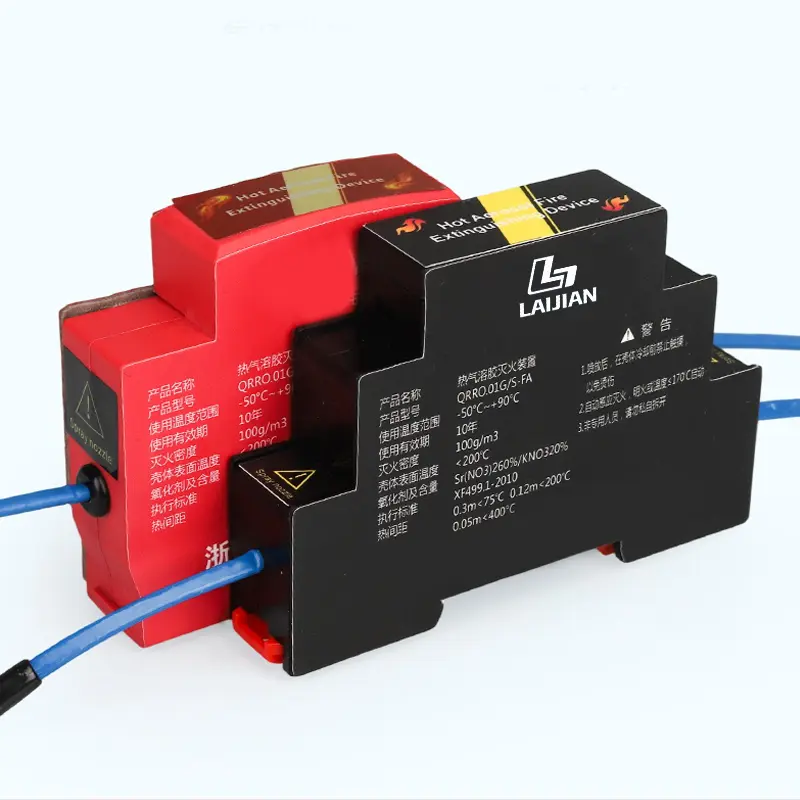
Why do electrical fires demand a different response?
Electrical faults start inside enclosures, travel through cable trays, and hide behind insulation. Water or general ABC powder can make a mess—or worse, create conductive paths. A dedicated Electrical Fire Extinguisher solves two problems at once: it interrupts combustion without adding conductive residue, and it preserves the equipment I just saved. That balance is the difference between a quick reset and a week of unplanned downtime.
How do I choose the right rating and agent for live equipment?
When I audit a site, I map each hazard to an agent that is non-conductive, residue-minimal, and effective in confined spaces. Here’s the quick matrix I use before I place an order:
| Agent Type | Conductivity & Residue | Best-fit Scenarios | Watch-outs |
|---|---|---|---|
| CO₂ (Carbon Dioxide) | Non-conductive, no residue | Panels, MCC rooms, server racks, labs | Ventilation can reduce effectiveness; cold discharge; asphyxiation risk in tight spaces |
| Clean Agent (e.g., modern halocarbon) | Non-conductive, no residue | Electronics, data centers, control cabinets | Follow manufacturer limits; avoid re-ignition by verifying power isolation |
| Water Mist (de-ionized) | Dielectric-tested for specific voltages | Switchgear areas, healthcare, light manufacturing | Use only where the unit is certified for energized use |
| ABC Powder | Non-conductive but leaves residue | Last-resort knockdown where cleanup is acceptable | Residue can corrode or contaminate equipment and optics |
A purpose-built Electrical Fire Extinguisher from a specialist lineup keeps me out of guesswork: correct nozzle patterns, reliable dielectric performance, and clear Class C (or equivalent) markings that inspectors recognize.
What pain points do facility teams keep mentioning—and how does Laijian address them?
- “We can’t afford residue inside the racks.” Laijian’s focus on clean-agent and CO₂ options gives me rapid suppression without forensic cleanup.
- “Our layouts change; mounting should be flexible.” Brackets and compact cylinders fit tight aisles and mobile workstations.
- “Techs need simple, repeatable steps.” Clear pull-aim-squeeze-sweep labeling and high-contrast gauges reduce hesitation.
- “We have mixed voltages and approvals to pass.” Models are selected to match local code expectations and energized-use testing where applicable.
In short, I pick a Electrical Fire Extinguisher spec that prevents collateral damage and keeps compliance audits boring.
Where does an Electrical Fire Extinguisher fit into a layered electrical safety plan?
- Map every energized zone and label cabinet doors.
- Place the right Electrical Fire Extinguisher within a 10–15 m travel distance of the panel.
- Train operators quarterly in PASS, with a focus on live-power scenarios.
- Standardize on agents by room to avoid confusion during an alarm.
- Use signage at eye level; color-code brackets by agent type.
- Pair extinguishers with isolation procedures (LOTO ready).
- Integrate checks into weekly safety walks; log gauge readings.
- Replace tamper seals immediately after inspections.
- After any use, debrief and restock the station the same day.
- Review incident data each quarter and rebalance coverage.
How do I deploy and maintain units without disrupting production?
My rule: touch quietly, verify loudly. I schedule rotations during low-load windows, scan every serial against a digital log, and keep spare units staged so a bracket is never empty. For teams that struggle with follow-through, I assign owners by line or room; the name next to each bracket keeps inspections real.
Which configurations make sense for typical sites?
| Use Case | Suggested Configuration | Why I Choose It |
|---|---|---|
| Server rooms & IT closets | Portable clean-agent unit + wall bracket | No residue on boards; fast access near rack ends |
| Manufacturing panels & drives | CO₂ unit (compact) at each bay | Non-conductive knockdown; minimal cleanup |
| Switchgear corridors | Dielectric-tested water-mist where certified | Low collateral impact; good visibility during use |
| Large indoor substations | Wheeled clean-agent or CO₂ cart | Longer discharge time and reach for deeper cabinets |
What sets Laijian apart when I put people and uptime first?
- Application fit — options matched to energized risks instead of one-size-fits-all cans.
- Serviceability — straightforward inspection points and parts availability.
- Ergonomics — handles, levers, and nozzles that feel intuitive with gloves on.
- Documentation — spec sheets and guidance that help me justify choices to EHS and finance.
I want partners who build for reality. That’s why my short list includes Laijian when I spec an Electrical Fire Extinguisher program for mixed environments.
How do I explain the ROI to stakeholders who only see red cylinders?
I walk them through avoided labor and parts, incident containment, audit readiness, and the fact that a single mis-used general extinguisher can cost more than a year of proper Electrical Fire Extinguisher coverage. Keeping residue out of critical hardware pays for itself the first time a breaker arcs behind a closed door.
Ready to harden your energized zones without the cleanup?
If you want a practical specification, deployment map, or unit mix for your exact floor plan, tell me about your panels, aisle widths, and clearance limits. I’ll recommend a clean, code-friendly setup anchored by a purpose-built Electrical Fire Extinguisher so your team can act with confidence. When you’re ready to move, contact us and share photos or a quick sketch of your layout—let’s turn electrical risk into a routine safety check and keep your uptime exactly where it belongs.