

What Makes Lap Belt Essential in Modern Safety Systems?
2026-04-16
In today's transportation, industrial operations, and mechanical safety engineering, restraint systems play a critical role in protecting human life and reducing injury risks. Among all types of restraint equipment, the Lap Belt remains one of the most fundamental and widely used safety components. Although modern systems often integrate advanced multi-point harnesses, the Lap Belt continues to be a core solution due to its simplicity, reliability, and cost-effectiveness. Whether used in vehicles, machinery seats, aviation ground equipment, or industrial workstations, its importance cannot be overlooked.
As safety standards continue to evolve globally, manufacturers like Wuxi Chuanghecheng Metal Technology Co., Ltd. are dedicated to improving structural durability, material performance, and ergonomic design of safety restraint components, ensuring that every Lap Belt meets stringent international requirements.
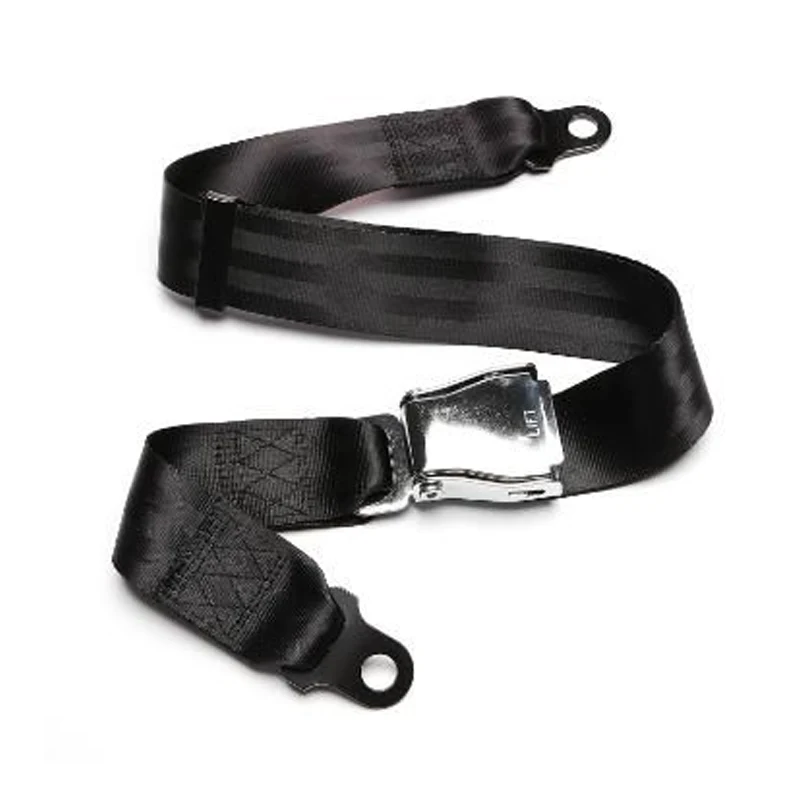
Understanding the Role of a Lap Belt
A Lap Belt is a type of safety belt that secures the occupant across the pelvic region. Unlike a full-body harness, it focuses on restraining the lower torso, preventing forward movement during sudden stops, collisions, or equipment jolts.
Its primary functions include:
- Preventing occupant ejection
- Reducing lower-body injury risk
- Stabilizing seating posture during movement
- Providing basic restraint in compact seating environments
Despite its simplicity, the Lap Belt plays a foundational role in safety engineering systems.
How a Lap Belt Works in Safety Applications
The working principle of a Lap Belt is based on controlled force distribution. During sudden deceleration or impact, the belt absorbs kinetic energy and transfers the force to the strongest parts of the human body—the pelvis and hips.
Key mechanisms include:
- Tension locking system: Prevents excessive belt extension
- Energy absorption design: Reduces impact shock
- Anchoring points: Secure attachment to structural frames
- Adjustable straps: Ensure proper fit for different users
This simple yet effective mechanism is why the Lap Belt remains widely adopted across industries.
Lap Belt vs Full Harness: Key Differences
While both systems are designed for safety, they serve different levels of protection. The comparison below highlights their core differences:
| Feature | Lap Belt | Full Body Harness |
|---|---|---|
| Coverage Area | Waist and pelvis | Chest, shoulders, pelvis |
| Mobility | Higher freedom | More restricted |
| Comfort | Lightweight and simple | Heavier, more complex |
| Protection Level | Basic to moderate | High-level protection |
| Cost | Lower | Higher |
| Applications | Vehicles, forklifts, industrial seats | Aviation, racing, climbing |
The Lap Belt is often preferred in environments where mobility and quick operation are required, while full harnesses are reserved for high-risk conditions.
Why Lap Belt Remains Important in Modern Industry
Even with advanced safety technologies available, the Lap Belt continues to be essential for several reasons:
1. Simplicity and Reliability
Its mechanical structure is straightforward, reducing failure points and ensuring consistent performance.
2. Cost Efficiency
Compared to complex harness systems, Lap Belts are significantly more affordable while still meeting safety standards.
3. Versatility
They are widely used in:
- Industrial machinery seats
- Forklifts and construction vehicles
- Public transportation seating
- Aircraft ground support equipment
4. Easy Maintenance
Minimal components make inspection, cleaning, and replacement more efficient.
Key Benefits of Using Lap Belt Systems
The adoption of a Lap Belt provides multiple safety and operational advantages:
- Reduces risk of ejection during sudden stops
- Improves seating stability in vibrating environments
- Enhances operator focus by increasing physical security
- Complies with many industrial safety regulations
- Lightweight and non-restrictive design
These benefits make it a preferred choice for many manufacturers and equipment designers.
Material and Engineering Considerations
The performance of a Lap Belt heavily depends on material quality and engineering precision. High-performance belts typically use:
- High-strength polyester webbing for tensile durability
- Metal buckles with corrosion resistance
- Reinforced stitching for load-bearing reliability
- Adjustable locking mechanisms for user adaptability
Wuxi Chuanghecheng Metal Technology Co., Ltd. focuses on precision metal processing and structural component manufacturing, ensuring that Lap Belt hardware parts maintain high strength, durability, and stability even under extreme stress conditions.
Common Applications of Lap Belt Systems
The Lap Belt is widely used across multiple industries due to its adaptability and practicality:
- Automotive Industry: Passenger cars, buses, utility vehicles
- Industrial Machinery: Forklifts, loaders, cranes
- Aviation Support Equipment: Ground handling vehicles
- Marine Seating Systems: Boats and offshore platforms
- Agricultural Machinery: Tractors and harvesters
Its cross-industry usage highlights its universal importance in safety design.
Installation and Usage Best Practices
To ensure optimal performance of a Lap Belt, proper installation and usage are essential:
- Always secure belt anchors to reinforced structural points
- Ensure correct belt tension—not too loose or too tight
- Inspect regularly for wear, fraying, or buckle damage
- Replace immediately after any significant impact event
- Train operators on correct fastening procedures
Proper usage significantly increases the protective effectiveness of the system.
Future Trends in Lap Belt Development
As safety engineering continues to evolve, Lap Belt technology is also advancing. Future trends include:
- Integration with smart sensors for tension monitoring
- Lightweight composite materials for improved comfort
- Enhanced corrosion-resistant coatings
- Modular designs for multi-application compatibility
- Improved ergonomic shaping for long-duration use
Manufacturers are increasingly focusing on combining traditional mechanical safety with modern intelligent monitoring systems.
Conclusion
The Lap Belt remains one of the most essential and widely used safety restraint systems across multiple industries. Its simplicity, reliability, and cost-effectiveness make it a long-standing solution for protecting users in both transportation and industrial environments. While advanced safety harness systems continue to emerge, the Lap Belt maintains its irreplaceable position due to its practicality and proven performance.
With continuous improvements in material engineering and manufacturing precision, companies like Wuxi Chuanghecheng Metal Technology Co., Ltd. are committed to delivering high-quality components that enhance the safety, durability, and performance of Lap Belt systems worldwide.
If you are looking for reliable safety components or customized manufacturing solutions, contact us today to learn how we can support your safety equipment needs and provide professional-grade Lap Belt solutions tailored to your industry.